Understanding the types of QR codes is crucial in today's world, where businesses and creators use QR codes to share information quickly and without contact. This blog is designed to help you understand the different types of QR codes available and which QR code type you should use depending on your needs. As you review these simple static codes and more complex dynamic codes, it is important to know what code to use to improve user engagement, track codes, and improve overall marketing objectives.
What Are QR Codes?
QR codes, shorthand for Quick Response codes, are scannable matrix barcodes that can hold many different strands of information, including links, files, or contact details. Compared to a traditional barcode, QR codes have substantially larger data capacity, and they can be scanned without delay by any smartphone camera.
As our digital interactions grow, awareness and comprehension of the types of QR codes and how they work will help both users and businesses select the best QR code type for direction, payments, authentication, or marketing. Essentially, QR code technology works by taking existing data and rendering it into a pattern of squares, which a scanner can read and decode in seconds - they are truly one of the quickest ways to reach a digital space today.
Key features of QR codes include:
- The ability to store many strands of data.
- Quick, easy scanning with phones.
- They can provide links, files, contact info, etc.
- Quick access to digital space without having to type the URL.
- They are primarily used for marketing, payments, menus, apps, and authentication.
Major Types of QR Codes and Their Uses
There are different kinds of QR codes, and it is important for businesses, marketers, and people to understand the types of QR codes. Each type has its own characteristics, advantages, and ideal uses. Selecting the right type of QR code will lead to greater user engagement, better tracking, and the best experience digitally for list members. In this section we will discuss static, dynamic, and specialized QR codes and indicate what type you should use when creating different objectives.
What Is a Static QR Code?
A static QR code is a predetermined code that cannot be changed once generated. Static QR codes are relatively easy to use, straightforward, and most useful when you want the QR code information to stay static.
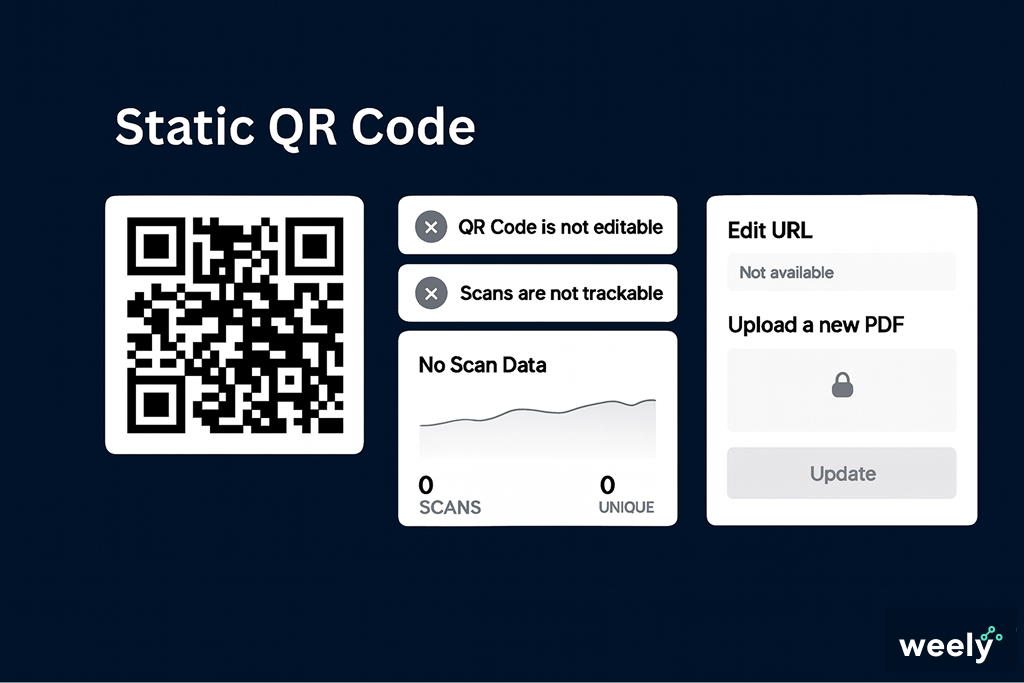
Key points about static QR codes:
- They permanently store the website address or text or contact information.
- Cannot be changed or updated once the QR code has been created.
- Static QR codes do not have tracking or analytics capabilities.
- Static QR codes are best used for low to no traffic, or multi-use, long enduring time frame uses, such as business cards, product labels, or printed flyers.
Use case examples:
- Linking to a company website or a blog post.
- Event information and ticket.
- Personal contact information.
Static QR codes are easy to create using qr code generator and suited for basic use cases when tracking, or collection of data is not needed.
What Makes Dynamic QR Codes Useful?
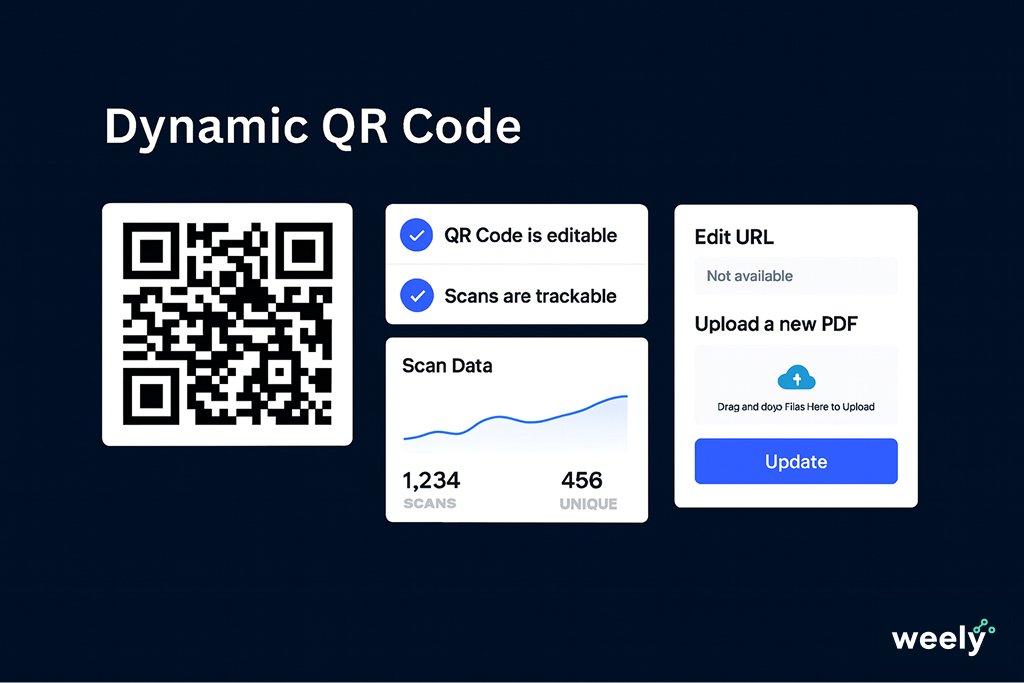
Dynamic QR codes are versatile and robust, which means that you can modify the content of the code after it has been created and printed. This makes dynamic QR codes a fantastic medium, especially in corporate or marketing campaigns, as you will have tracking and analytical data regarding that engagement.
Key advantages of dynamic QR codes:
- You are able to alter the URLs and content after printing.
- You are able to track scans and engagement with your audience.
- In the course of the user's visit, you are able to direct users to different pages based on physical location, device of engagement, or time of visit.
- You will have the ability to test and experiment with practical applications of marketing and promotions.
Use case examples:
- Redirect visitors to a seasonal promotion or launch of products.
- Digital menus, or interactive campaigns for hospitality industries.
- Analytics-driven marketing campaigns that are measurable to track user engagement.
Dynamic QR codes give flexibility and insights to brands to make them the best to use for a connection to the promotion of your programs.
Specialized QR Codes You Should Know
Specialized QR codes exist for specific purposes and have more functionality than simply being linked to a URL or providing the user with text. These QR codes are deemed convenient features in many cases.
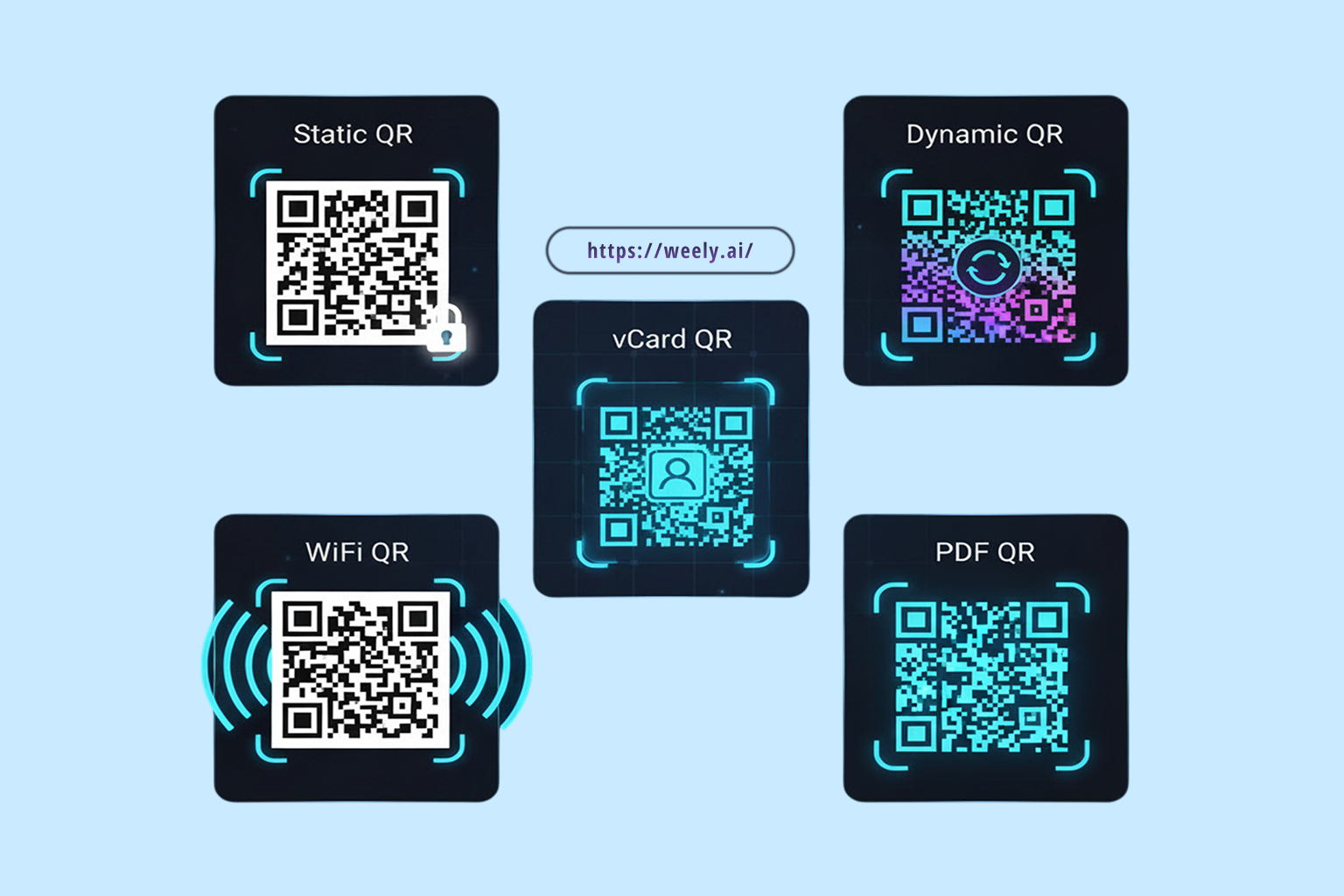
Popular types of specialized QR codes:
- vCard QR Codes: Share digital business cards right away.
- WiFi QR Codes: Let the user connect to a web service without having to type in a password.
- PDF QR Codes: Simply link and share PDF documents or brochures.
- App Download QR Codes: Connect the user to an app store site quickly, where they can download the app.
- Multi-URL QR Codes: Use one QR code to connect to different destinations, depending on the type of device or location being used.
Specialized QR codes can be particularly useful for businesses, events, or services where something targeted, interactive, or multi-functional is necessary.
Static vs Dynamic QR Codes – Key Differences
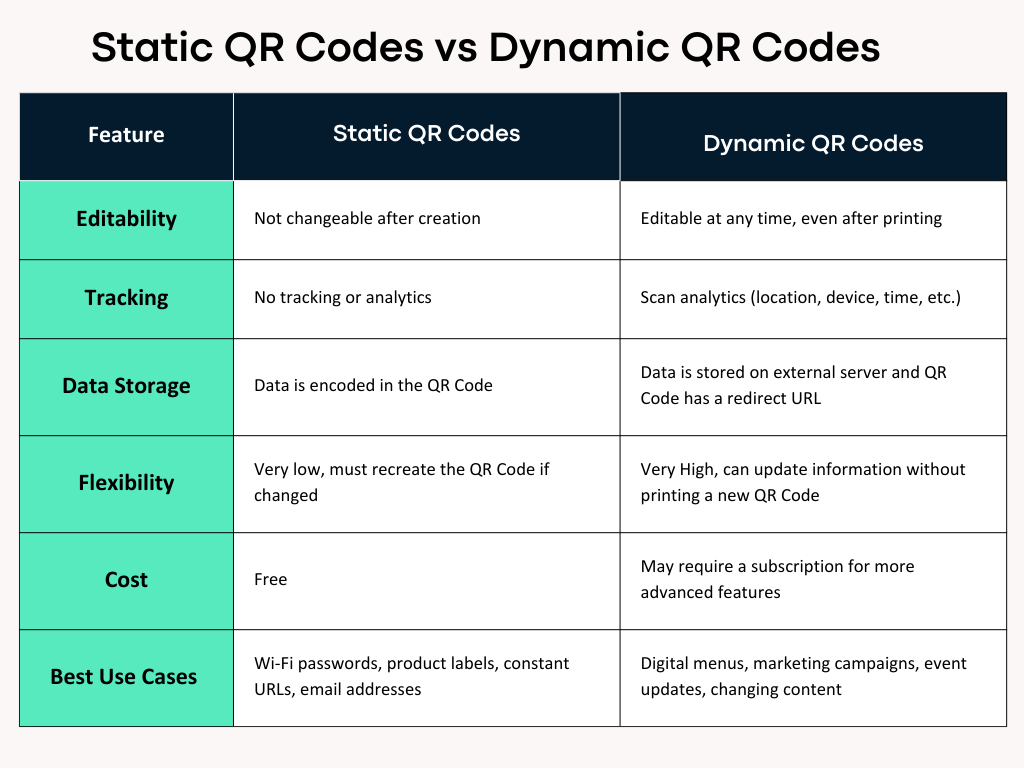
Data is directly encoded into static QR codes. Therefore, this type of QR code cannot be changed, and generating static QR codes is free. They are best for constant information such as Wi-Fi passwords, product labels, etc. Dynamic QR codes use a redirect link that allows you to edit the content at any time and gives you scan analytics such as location, device type, and time. This is a flexible and long-term solution! Dynamic QR codes are well suited for digital menus, marketing campaigns, or any information that is going to change frequently.
Which QR Code Type Should You Choose?
Choosing a QR code type comes down to your intention:
- Select a static QR code if the content is going to be around forever, is easy, and you're not worried about tracking.
- Select a dynamic QR code if you want the ability to change the content, have the statistics available, and have the ability to change it anytime you want.
In general, for most business and marketing uses, a dynamic QR code provides even more value and scalability if you want to track specific data, or conduct frequent edits to your content.

How to Decide the Right QR Code Type
Selecting the appropriate QR code is dependent on the information you intend to share and if that information will change over time. Knowing your goals will help you decide if a static QR code or a dynamic QR code will be the most successful option for your project. Business owners, in particular, will want to carefully choose QR codes that offer flexibility, tracking and analytics, and long-term use.
Factors to consider when choosing a QR code type:
Will the content change?
- If yes, choose dynamic QR codes to enable you to modify the destination URL with ease.
- If not, static QR codes will suffice.
Do you need tracking or analytics?
- Dynamic codes will offer the most detailed scanning information.
- Static codes will provide no data.
Is your project long-term or short-term?
- Dynamic codes can be used for campaigns or marketing purposes that can change information often.
- If fixed information, use static codes.
Budget considerations
- Static QR codes will theoretically be free.
- Dynamic QR codes will likely require a subscription (which is pretty normal, especially if you need reporting and analytics data).
Simple guide for choosing the right type:
- If the destination URL will not change, use a static QR code for Wi-Fi logins, product labels, or other types of materials that will not change.
- If the destination content will change soon, use a dynamic QR code for a restaurant menu, promotion, a particular campaign, or any material that you intend to change.
By considering certain factors, you can better determine the QR code type that will be the most effective. Choosing the code that will provide the best experience, reliability, or information will provide better performance, convenience, and long-term use.
Final Thoughts on the Different Types of QR Codes
Taking the time to review different types of QR codes is helpful in determining the right solution for a project, whether it is a static code for permanent information or a dynamic code that offers powerful tracking and editability. The use of QR codes is on the rise because of the convenience, speed, and seamless connection from offline to online experiences.
Static codes are ideal for simple and permanent use, while dynamic codes allow flexibility for businesses that need to frequently incorporate new content or marketing tracking. By choosing the best type, you will create greater engagement, a better user experience, and offer more value today and over time, regardless of the content being digital or print.
FAQs About the Different Types of QR Codes
What are the different types of QR codes?
There are two primary types of QR codes: static QR codes and dynamic QR codes. Static QR codes are permanent and contain fixed information that cannot be edited. Dynamic QR codes are more flexible because they are based on a redirect link, which allows you to update the content whenever you want and also track and analyze scans.
Which type of QR code is best for marketing campaigns?
A dynamic QR code is the superior option when deciding on QR codes for your marketing campaigns. It allows you to edit links, update an offer, and even track scan data, including the location and the kind of device the user is scanning the code from. You are essentially able to improve the performance of the campaign without needing to reprint new QR codes.
How do static QR codes differ from dynamic QR codes?
The most significant difference is that static QR codes remain with the data that is permanent, while dynamic QR codes allow you to track data and edit existing links. Static QR codes are good for situations where information is permanent, such as a Wi-Fi password. However, for QR codes that will be changed in the future, such as a digital menu or marketing promotional campaigns, or any marketing that you think might change in the near future, dynamic QR codes are a better option.
Which QR code type should I use for a restaurant menu?
If creating a digital menu, you should utilize a dynamic QR code, as you will be able to edit the menu items, pricing, or images at any time during the campaign. This method is more cost-effective since you don't have to reprint new codes, and it is advantageous for the user experience.