Offline marketing strategies are coming back quickly in 2026. AI is everywhere now, but it's still important to meet people in person. People tend to trust only what they can physically experience. Simple times spent together build trust. These times stick in your mind and help you make decisions about what to buy.
With the advent of technology and data, brands offline marketing strategies must adapt to be effective. Brands are combining classic offline marketing strategies with creative ideas. Brands look at successful offline marketing strategies to determine what people like to see from brands. Such analysis enables brands to determine ways to enhance the effectiveness of offline marketing strategy to capture and maintain customer attention.
Offline marketing strategies that are based on data are very important today. Data reveals which approaches succeed and which fail. It helps brands make clear decisions. Small businesses can use offline marketing strategies to make their brands stand out in their area. They help small businesses grow and get people to trust them.
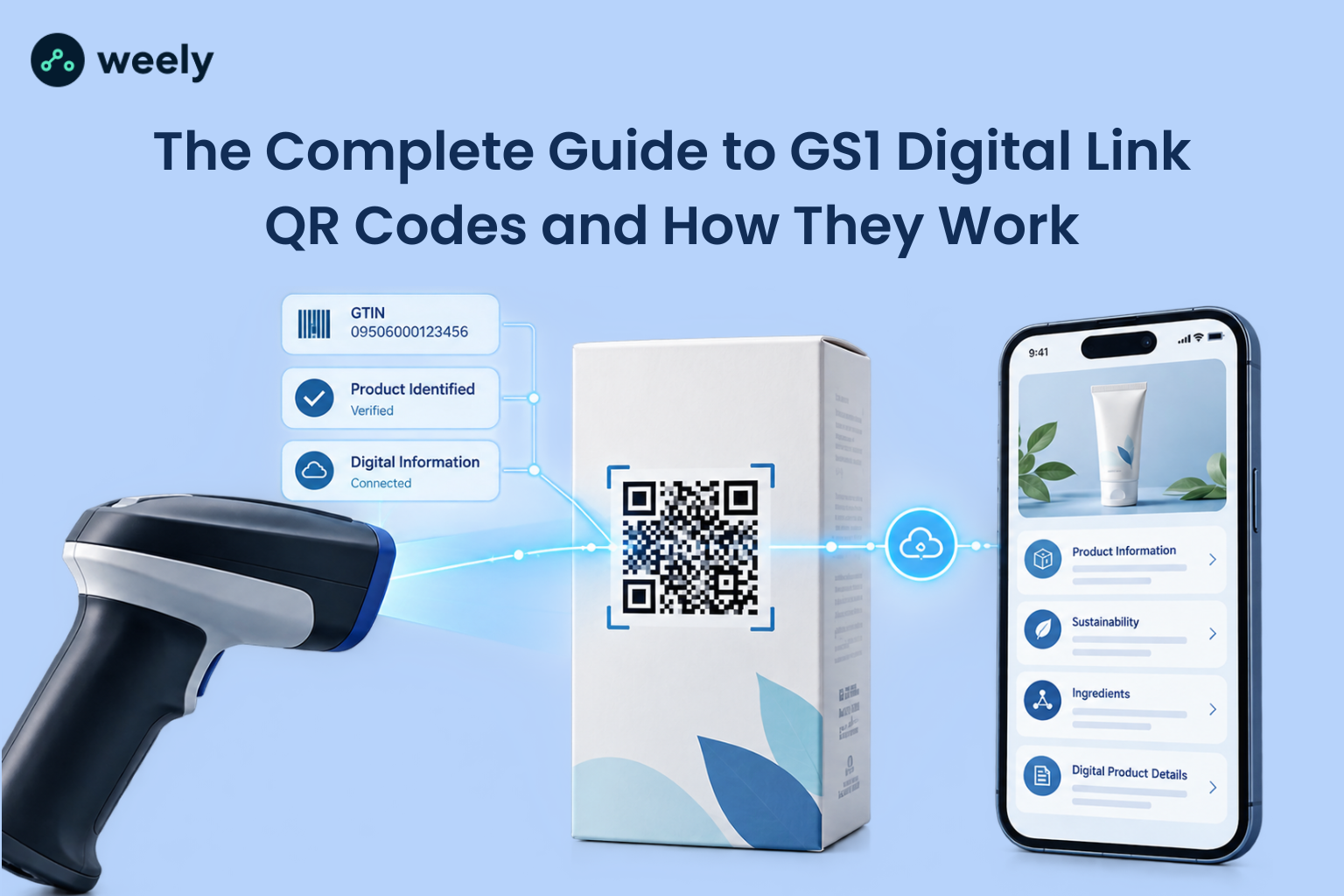
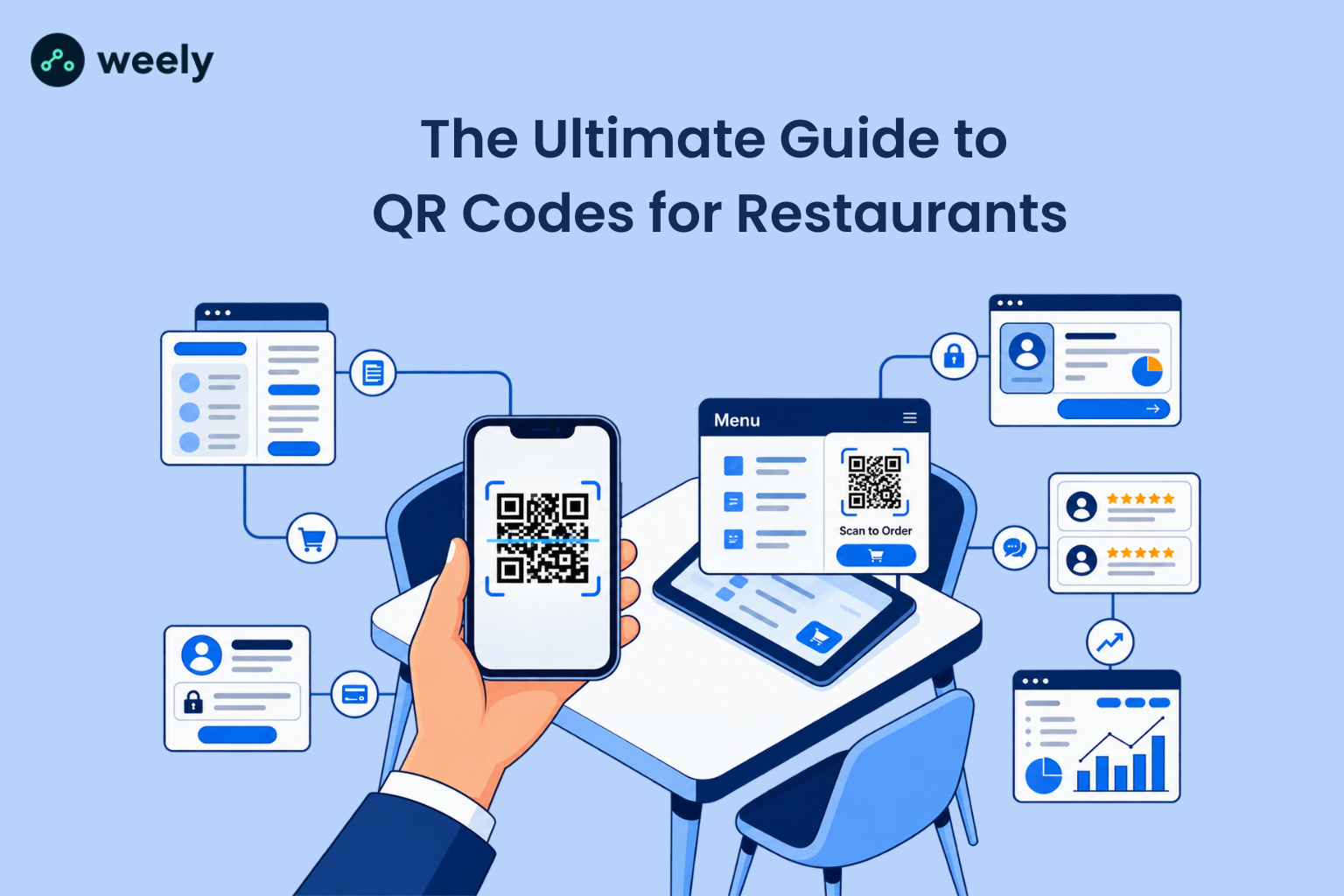
Many brands now use QR codes in their offline marketing. QR codes are simple and quick. People can easily scan them. They make online paths out of flyers and posters. They link things that happen in real life to things that happen online. This guide tells you the best ways to market offline in 2026 and shows you how to make real experiences that are meaningful, easy to remember, and easy to keep track of.
The Transformation of Offline Marketing in 2026
Offline marketing is quick and smart. For instance, brands use technology in stores. This approach makes shopping enjoyable. It also provides clear results. Furthermore, offline marketing connects things that happen in the real world with online tools. It helps small businesses marketing gain trust, keep people's attention, and lead them to the next step.
From static placements to interactive environments
Ads from the past just sat there. People just looked at them. Now, offline marketing wants people to do something.
For example, interactive marketing includes:
- Posters with QR codes
- Screens that move with people
- Packaging linked to videos
Because of this, these ads are entertaining. Furthermore, they're easy to see and remember.
Consumer demand for seamless physical-to-digital journeys
People shop online and offline quickly. It should be easy to market. Customers also want:
- Fast access to content
- Quick actions with little work
- Everywhere you go, the same brand message
Because of this, marketing from offline to online is growing quickly in 2026.
The role of automation, data, and AI in offline channels
You don't have to guess when you do offline marketing. For example, brands use AI and data to find out how people interact with ads. Tech also helps brands:
- Track QR scans and visits
- See who uses ads
- Change messages by time or place
This makes offline marketing smarter and more helpful.
Why offline marketing is now measurable, scalable, and smart
It was hard to tell if ads that weren't online worked before. But now brands can test and make them better. Also, offline marketing helps brands in the following ways:
- Keep track of real results
- Try out different ideas
- Make your campaigns more successful
In the end, marketing offline in 2026 is easy, smart, and works.
Key Offline Marketing Strategies Powering Engagement in 2026
The focus of offline marketing in 2026 is on people, rather than advertisements. Rather than simply relying on passive messages, brands are now producing experiences that activate consumers to take action, making offline marketing easier and more practical.
Additionally, offline marketing will now integrate with digital tools so that brands can take their customers through a step-by-step process to reach them at various stages of engagement, track the results and do a better job of creating better marketing choices.
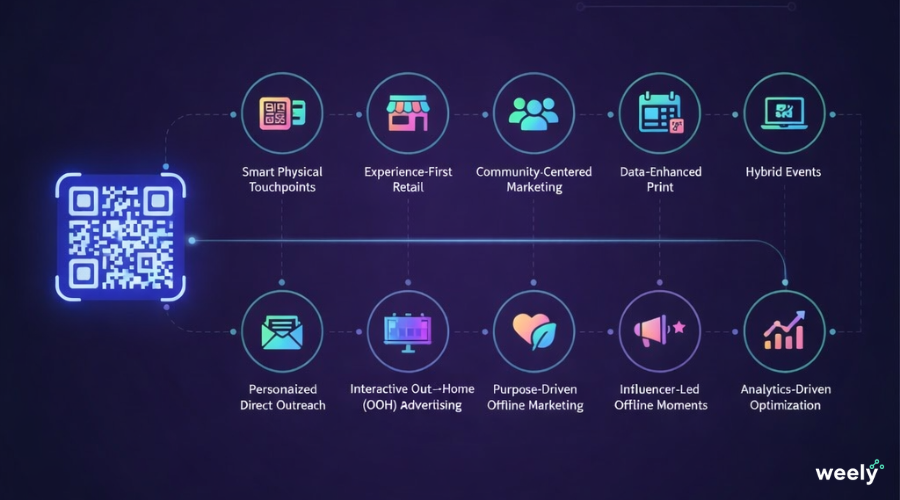
Smart Physical Touchpoints
Intelligent physical touchpoints help people make easy decisions. And instead of just reading messages, people can scan, tap or click. Therefore, they engage more often.
Many brands now use:
- Direction cards and monitors with QR codes
- Product boxes with scan options
- Online content with hyperlinks to labels
Moreover, messages can differ by place or time. One of the scans, for example, can display different content. As a result, physical things aren’t really ads but rather tools.
Experience-First Retail & Brand Spaces
In physical spaces, it’s all about comfort and interest today. Brands naturally want people to stick around. As a result, stores and pop-ups are easy to browse.
Common ideas include:
- Simple interactive showrooms
- Short-term pop-up spaces
- Guided product areas
Each visit feels different. Plus, brands get to know what people like. So I notice the next times I feel better.
Community-Centered Marketing
Community-focused offline marketing builds trust. When brands show up in local places, people take notice. Accordingly, the relationships feel real.
Brands often support:
- Local events
- Small workshops
- In-person meetups
But the task should not end there. So brands chase them online and keep their attention.
Data-Enhanced Print Advertising
Print ads still work today. But they need to be basic enough that you can keep tabs on them. As a result, brands comprehend results in starker terms.
Modern print ads often include:
- QR codes for quick access
- Short links to websites
- Simple, clear messages
The result is that brands see what people do next. That helps to make money go further.
Hybrid Events & Offline Experiences
Hybrid events combine in-person meetings with digital tools. This enables brands to reach more people. So, the events are longer and work harder.
Strong hybrid events include:
- Online content before the event
- Digital tools during the event
- Follow-up messages after the event
From this flow emerges such a one-to-many opportunity to connect.
Personalized Direct Outreach
It’s direct outreach at its best when it feels personal. Even in some of those cases, I’ll just say with hindsight now, given the situation, it felt more like we reran something than sent the same message, but brands had an ability to adjust content. And so people respond more.
Popular methods include:
- Targeted direct mail
- Local offers
- Messages based on past actions
So, offline messages feel useful and not random.
Interactive Out-of-Home (OOH) Advertising
OOH ads now invite action. Rather than passively watch, they can be an active part of the process. As a result, the attention lasts longer.
Brands often use:
- Screens that react to movement
- QR codes on public ads
- Messages that change by time
Brands are thus able to measure real interest, not conjecture.
Purpose-Driven & Ethical Marketing
Honesty and values matter to people. So, offline marketing has to be authentic. Physical messages help build trust.
Brands focus on:
- Clear and honest language
- Support for real causes
- Simple value statements
Since people see these messages in real places, they find them more believable.
Influencer-Led Offline Moments
Influencers now speak to people in person. They also host smaller events and talks. Trust builds more quickly as a result.
Brands work with creators for:
- Meetups
- Product events
- Local gatherings
These are the sort of moments that frequently go viral. One event, therefore, reaches many.
Analytics-Driven Offline Optimization
Data that is clear is now used in offline marketing. Brands don't guess anymore. They test and make things better instead.
Key steps include:
- Tracking scans and visits
- Testing different messages
- Online data compared with offline findings
Offline strategies get better with time.
Best Practices for Modern Offline Marketing
Keeping offline marketing simple and useful is the most effective approach. Individuals dislike interruptions. Consumers are looking for a checklist that they can mark off. Brands should prioritize simplicity and clarity.
- Design for action, not interruption: Make it easy to do something. For example, swiping or tapping should be fast and simple. Folks will participate without feeling coerced into it.
- Keep messages the same everywhere: Customers move between stores and the internet. And so, everywhere, the words and the pictures should coincide. This endears people to the brand.
- Use short words and clear pictures: Words and images that are simple are easy to understand. Messages remain visually crisp and easy to read. Simple is better; people respond to it!
- Make experiences simple for everyone: Offline approach should target overall users. When there are clear signposts, content, and action, it becomes more participatory and all the richer for the consumer.
- Plan together with all teams: The best campaigns are a team effort. The earlier the creative, tech, and data teams plan together, the better the work is. So campaigns launch quicker and work better.
Challenges Facing Offline Marketing in 2026
Offline marketing still has some fundamental problems. People flit from one store to another, one website to another, and one ad to another. But brands may not always behave as the people do. This means that some experiences come through in a fragmented manner and can be difficult to make sense of.
- Broken customer journeys: Customers move through multiple channels where there is no contact with a particular brand, and they could face disconnection from the retargeting process via other channels.
- Privacy concerns: Customers do care about their information. When brands whitewash, or lie, people cease to trust them.
- Technical problems: Offline tools are still reliant on a computer. But if a system breaks down, the magic disappears. Planning and testing are key.
- Proving return on investment: Offline doesn’t come back right now. With better tools, brands could connect those actions to outcomes.
What’s Next: The Future of Offline Marketing
Offline marketing is going to get more personalized in the future. Real-time, instantaneous changes will occur. As a result, they will see content that is right for them and their mood.
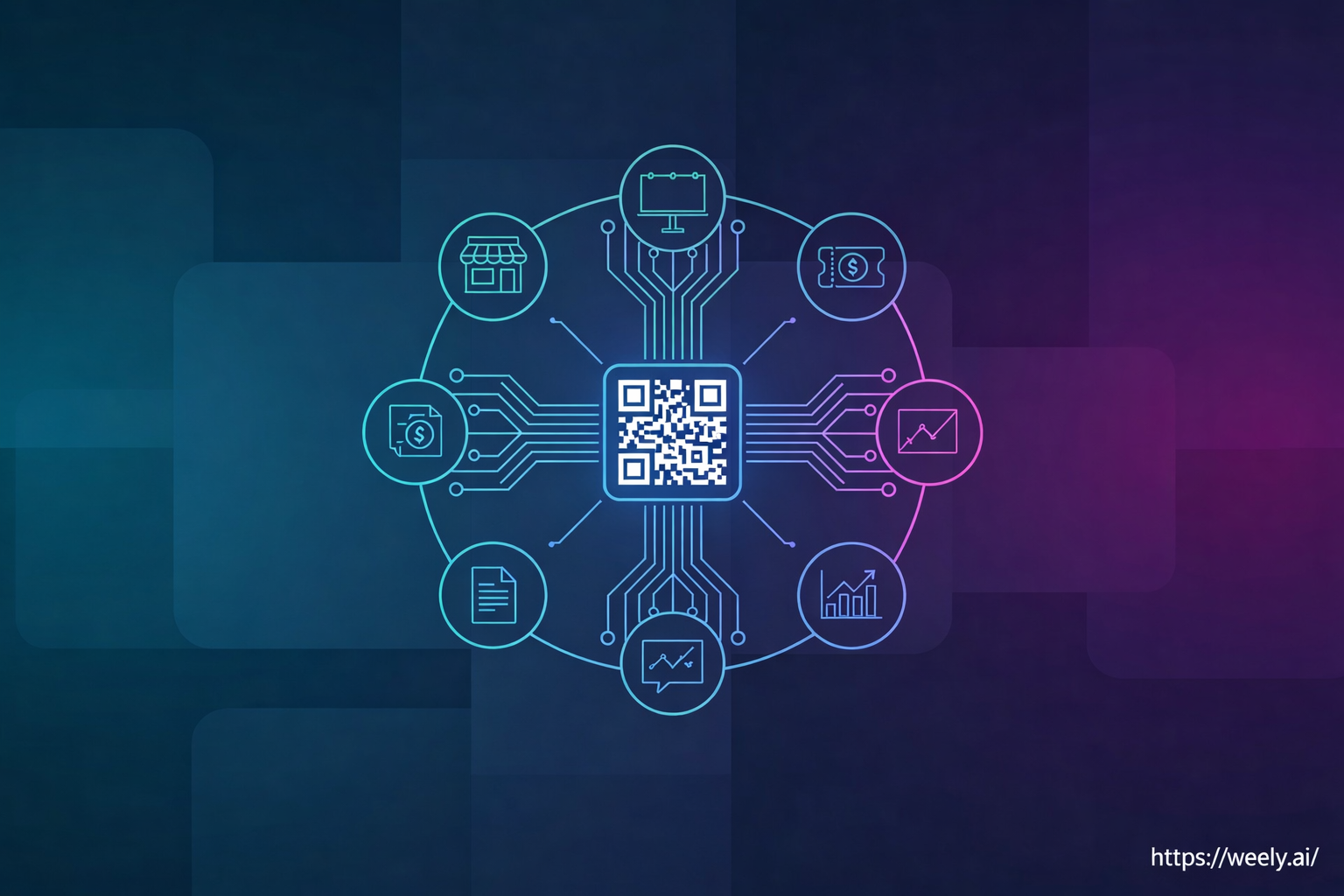
Using tools like a QR code generator will help create dynamic offline experiences that adapt instantly.
Offline marketing will also be linked to smart places. Information will also be exchanged between cities, stores and public locations. This is how the messages will appear at precisely the right time.
There are also going to be more ways for you and me to talk to each other. Voice, gestures, and silence signals will gradually replace screens in certain locations. This joint makes offline marketing seem calm and mainstream.
There will always be a physical underpinning even in the digital world. Trust is forged in the physical world. That’s to say, offline marketing will still be a major element in the economy.
Conclusion
Our marketing is no longer conventional, offline marketing. It has evolved thanks to the development of new tools. It links real-world events to digital help today. Weely AI and other tools help brands connect what people do in real life to what they do online. A QR code scanner can easily tether a physical object to information on the web.
Marketers need to adjust to these tools. They need a sharper focus on people than channels. Results come after experience. This is much easier to do if you have a QR code scanner.
Brands that spend real money on engagements stay in the game. They establish trust through real-life meetups and Weely AI. Offline becomes easy, useful, and connected to digital life.
Frequently Asked Questions
What are offline marketing strategies?
People can see your offline marketing strategies in real life. They use stores, print ads, and events, for instance. People trust brands because of this way of doing things. This makes people feel more connected.
What are the best offline marketing strategies for 2026?
The best ways to market offline in 2026 are based on things that really happened. Businesses use both online and offline tools to get things done. The technology makes it easy for people to get online.
- Print ads with QR codes so that scans are easy
- Local events and pop-up shops, because they feel personal
- In-store demos, followed by digital updates
How do offline marketing strategies help customer engagement?
Offline marketing strategies seem real and like people. When people meet brands in person, they trust them more. This kind of behavior makes people more engaged.
- Builds trust by making contact feel real
- Creates memory so that brands are remembered
- Brings people back, which increases loyalty
Can small businesses use offline marketing strategies?
Yes, small businesses can use marketing methods that don't involve the internet. Local actions are good because they don't cost as much. Things also get better when you use simple tools.
- Flyers with QR codes to make things happen quickly
- Community events to make people feel close
- Then, online links to in-store deals
How do QR codes support offline marketing strategies?
QR codes link things in the real world to web pages. So, one scan opens content quickly. This makes it easy to move from offline to online marketing.
- Links print to pages, so it's easy to keep going.
- Tracks scans, because data is important.
- Improves flow, so users stay interested.
Are offline marketing strategies still effective today?
Yes, strategies for marketing offline still work. People stay interested when they see real moments. Digital tools help them improve, then.
What are examples of successful offline marketing strategies?
Simple is the best way to market offline. For example, they help people move from real life to the internet. This helps brands do better.
- Pop-up shops and events to help people remember
- QR code posters and packaging, because scans turn into sales
- Demos in stores, then follow-ups online