In today’s digital world, every click counts. Every day, brands, marketers and creators share thousands of links across ads, emails, websites and social media. It is no longer possible to manage all these links manually. This scenario is where link management tools become useful.
A links management tool helps you build, manage, track, and optimize links from one place. This is way beyond simple URL shortener tools. The latest platforms provide analytics, branding, automation, and campaign insights to help businesses improve performance and understand user behavior.
What Is a Link Management Tool?
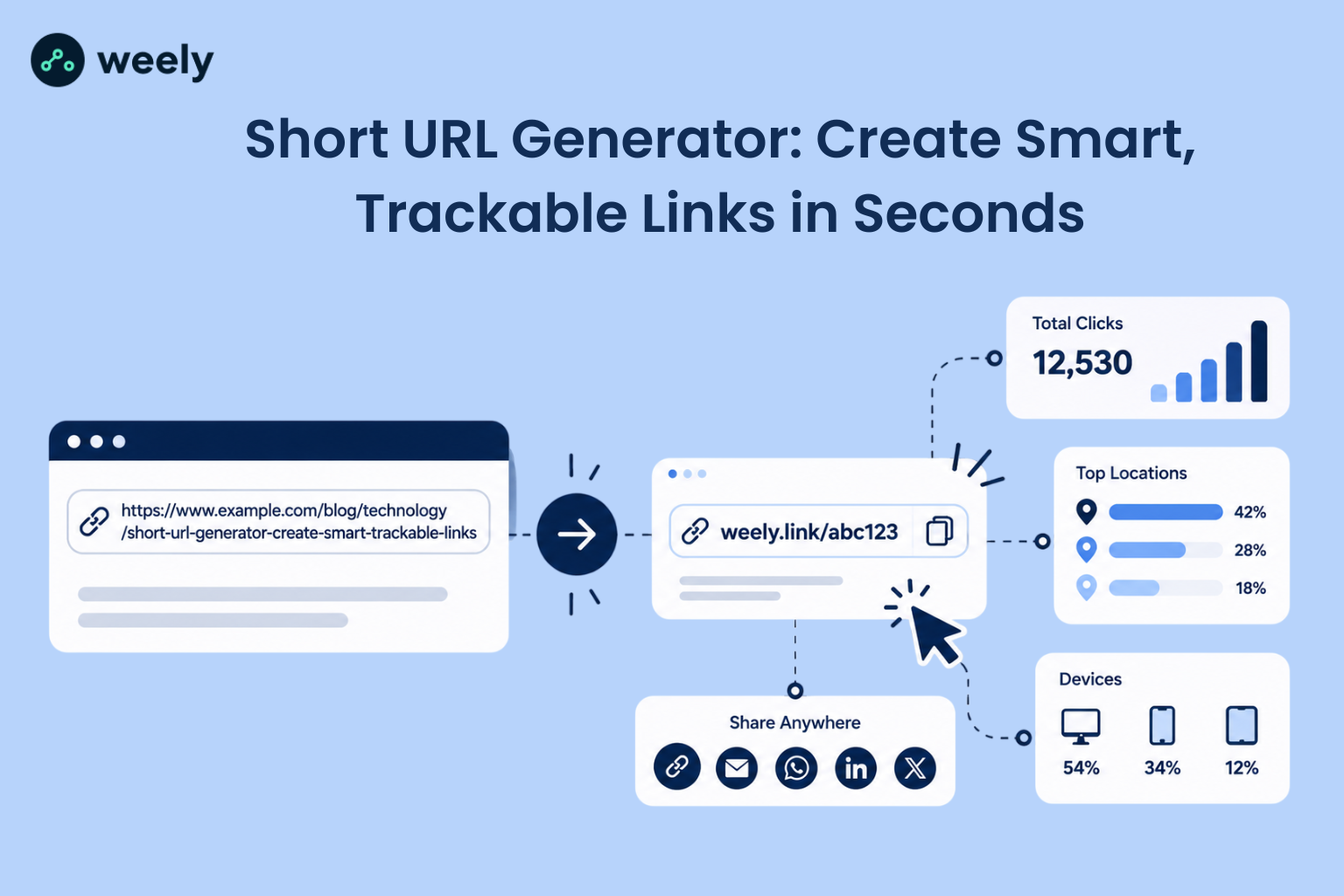
A link management tool is software that helps you manage creation, sharing and tracking of links. It converts long complex URLs into short, clean links and adds powerful tracking and analytics capabilities.
Instead of just posting a long URL, you can make use of custom short links that are easy to read and track. That’s why link management tools are an important part of the digital marketing system for any business.
Essentially, these tools transform every link into a tracked marketing asset.
How Link Management Differs from Basic URL Shorteners
URL shortener tools and full link management software are two very different things, and there’s a lot of confusion around them.
A basic URL shortener only reduces the length of a URL. It does not provide insight or control. On the other hand, a complete link management platform provides tracking, analytics, branding, and optimization features.
If you are looking for the best URL shortener for business, you actually need a complete system, not just a shortening tool. This is why modern businesses prefer sophisticated link management platforms over simple tools.
Why Link Management Is More Than Link Tracking
Many think that link tracking tools are enough to understand performance. But link management tools are much more than that.
Tracking only tells you how many times a link was clicked. But a proper link management platform will tell you where those clicks came from, what campaign drove them, and what users do after they click.
The best link tracker is about more than the numbers. It's about insight, optimization, and decision-making. That’s why businesses prefer link analytics tools over simple tracking systems.
How Link Management Tools Work (Technical Overview)
Behind the scenes, link management tools use smart redirection and tracking. They silently capture, analyze, and reroute every click on a link. This means the user will have a seamless experience with no lag or interruption.
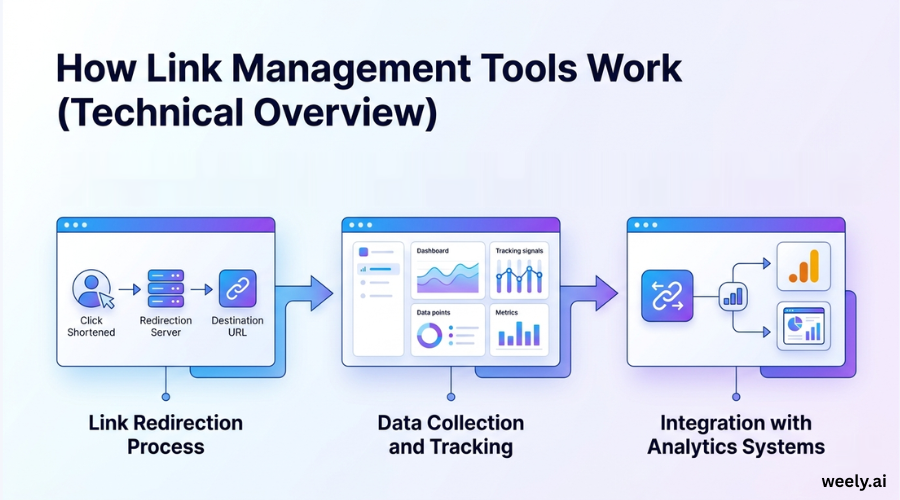
Link Redirection Process
When you generate a short link with link management tools, the system automatically generates a redirect link. Finally, the link serves as a bridge between the user and the destination.
The system redirects the user to the original page immediately after the user clicks the link. And it takes milliseconds. And so the user does not know of any delay.
Finally, this mechanism allows for a full click tracking. All URL shortener tools and modern link management platforms are built on top of this mechanism.
Data Collection and Tracking
Clicking a managed link generates useful data. The system gathers information like device type, browser, location, and time of click.
An example of this is when a user clicks a link, the system logs it in real time. Then it arranges the data for analysis.
What this means is that link tracking tools give you crystal-clear insights into audience behavior and campaign performance. This information helps companies improve their marketing decisions over time by allowing them to identify which strategies are most effective and adjust their campaigns accordingly.
Integration with Analytics Systems
Modern link management software can be integrated with analytics platforms such as Google Analytics. That allows businesses to combine link data with overall marketing performance.
One important integration involves using UTM parameters. These parameters change a normal link to a UTM link. They help you track traffic sources across campaigns, ads, and social media channels.
Plus, it makes campaign tracking more accurate and actionable.
What Happens When Someone Clicks or Scans a Managed Link
When a user clicks or scans a managed link, the request is processed immediately in the background. The main objective is to reach the destination quickly for the user and to collect important interaction data at the same time. This process happens in milliseconds and does not affect the user experience.
At the same time, the system accepts many data points and organizes them for analysis. This gives the system a better understanding of how the user is behaving, how the campaign is performing and where the traffic is coming from.
Key actions that take place during a click or scan:
- The click or scan event is recorded instantly in the system
- Users are redirected to the final destination without delay
- Device type, browser, and operating system details get captured
- The approximate geographic location is identified by the system
- UTM parameters help in campaign attribution processing
Besides the main stages, the system organizes traffic data for reporting, observes repetitive interactions to analyze patterns, and produces structured insights for performance evaluation.
What Link-Level Analytics Can and Cannot Measure
Link analytics is also an important part of understanding how people interact with the links you share. It allows companies to turn raw clicks into real insights. This results in improved decision-making.
What You Can Measure
Modern link analytics tools give you clear insights into user behavior. You can track overall clicks, geolocation, type of device, referral sources, and time engagement.
These insights assist businesses in comprehending traffic patterns. Today, they also help better digital marketing strategies. This information allows companies to optimize digital marketing tools. Such tools can also help to improve conversions.
What You Cannot Measure
The power of link performance analytics is not boundless. But it can’t always identify individual users because of privacy rules, which can limit the effectiveness of targeted marketing strategies.
It also can’t fully explain user intent. That’s why businesses use link management platforms in combination with traffic analytics tools. This combination gives them a complete view of performance.
This balance, therefore, improves decision-making. It gives better knowledge of customer behavior.
Core Link Management Features Most Teams Need
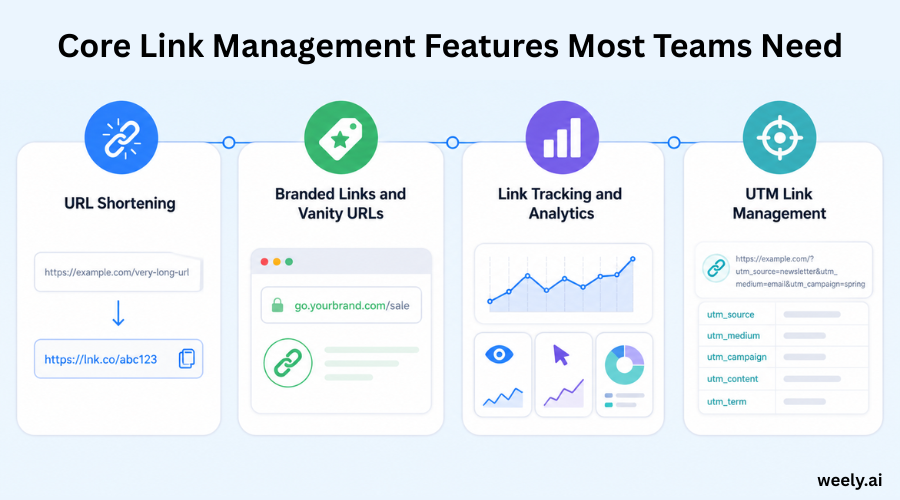
Modern marketing teams leverage structured tools to scale link management and optimization. These features improve tracking, branding, and campaign performance. This functionality makes the teams more efficient.
URL Shortening
URL shortening is at the root of every link management software. It makes long URLs short, clean, and easy links.
These links are simpler to use in email, ads, and social media. So URL shortener tools still have their usefulness for advanced systems.
Branded Links and Vanity URLs
A vanity URL is a link with a brand name or a keyword. It's simple, clear, and easy to remember.
Click-through rates are higher with branded links. Therefore, branded vs. generic links are compared by companies. Often they choose branded options.
Branded link management increases brand awareness as well. This builds user trust. It also makes links look more professional.
Link Tracking and Analytics
Link tracking tools help businesses to measure link performance after sharing. They show clicks, sources, and engagement.
A best link tracker features real-time reports. It also has clear dashboards. When used with link analytics tools, it is a strong system.
So companies get better at running their campaigns. They don’t just measure them.
UTM Link Management
The UTM link has tracking tags for campaign details. These tags identify the source of the traffic.
UTM parameters, which are tags added to a URL to track the performance of online campaigns, help to attribute accurately. They allow companies to monitor the performance of ads, email, and social media.
So, link management tools for marketers rely on UTM tracking. This helps with better decisions.
Advanced Link Management Capabilities for Scaling Teams
Businesses need better systems as they grow. A modern link management SaaS platform solves these issues. It offers automation, APIs, and bulk link creation.
These features make it easy for teams to manage thousands of links. They also help teams work together better across different departments.
Many startups are looking for an affordable and scalable startup link tracking platform. This allows them to grow while still having full control over the performance of the link.
Link Management vs Link Tracking vs Analytics Platforms
There’s a bit of confusion between the different tools.
Link tracking tools only track clicks. Analytics platforms are all about overall website behavior. But link management tools combine the two and add branding and control.
This makes a link management platform more powerful than standalone tools. It gives you a complete system to manage, track, and optimize links.
How Teams Use Link Management in Real Workflows
Teams use link management tools for marketers in daily campaigns. They build, monitor, and optimize links across a range of channels.
These tools simplify and speed up work. They also decrease the likelihood of errors when sharing links. It helps teams stay more organized.
Businesses use link management tools for marketing campaigns to ensure consistency and performance tracking. This can help improve your ROI and the effectiveness of your campaigns. It also gives you clear insights into how your users behave, such as which links are most frequently clicked and how long users engage with your content.
Marketing teams can improve campaigns with real data. Furthermore, they can compare results across platforms. They’re at the heart of everything from social media to email marketing in modern workflows.
Managing Links Across Multiple Channels and Campaigns
Today marketing is on many platforms. Businesses connect through ads, email, social media and websites.
The teams also need easy systems to stay organized. They also use link optimization tools to manage all links in one place. This ensures that links are consistent across channels.
Teams are more efficient, and they make fewer mistakes, which leads to improved overall productivity and better campaign outcomes. It also helps teams collaborate better across departments.
It also enhances tracking of your campaigns. This helps in measuring performance at scale. It's easy for teams to see what works and what doesn't.
Overall, these tools help teams make better decisions and drive stronger marketing performance.
Common Link Management Problems and How Teams Avoid Them
Broken links, bad tracking, inconsistent branding - many companies struggle with these types of problems. This means that when teams scale across multiple channels, campaign performance drops. These problems also reduce the reliability of marketing data.
Link management tools assist with these issues by offering centralized control, accurate tracking, and consistent formatting of links. This makes it easier for teams to manage links across campaigns. Also, these tools improve reliability and increase marketing performance over time.
Broken Links and Tracking Gaps
Broken or outdated links are one of the most common issues. This leads to poor navigation for users, and they lose trust. Bad links also harm campaign performance.
Another problem is incorrect tracking setups. They result in missing data or incomplete data. Consequently, teams cannot analyze performance effectively.
Inconsistent Branding Across Links
Different teams will create links without standards, leading to inconsistent branding. Such inconsistency means that the public trusts campaigns less. The public may also view these campaigns as disorganized.
Structured link systems solve the problem. They use the same brand on all shared URLs.
Lack of Centralized Control
There is no single system for link management, resulting in a fragmented approach. Such fragmentation makes it difficult for teams to track and update links.
They also spend time managing links between different tools. So centralized systems consolidate everything and increase control.
How to Evaluate and Choose the Best Link Management Tool
Which tool is right depends on your business needs and the scale and complexity of your workflow. The best link management tools for marketers combine analytics, branding, and flexibility. They do support small and large campaigns.
There are teams that begin with free link management tools for basic needs. Others graduate to advanced solutions when they require greater insights and automation.
Key Evaluation Factors
A good link management platform should be easy to use. It should also be able to scale and handle high-volume campaigns without any issues. Further, it must be able to support tracking, reporting, and integration with marketing workflows.
Scalability and Long-Term Use
As the campaigns grow, the system should be able to support more traffic and more links. It should do so without causing disruption. Scalability is important to keep the tool useful as marketing gets more complex.
Analytics and Control Capabilities
Very important is strong analytics capability. They help teams understand performance, plain and simple. For example, teams can track clicks, sources, and engagement patterns. This enables them to be better decision-makers and optimize campaigns well.
Make Link Management Part of Your Workflow
For best results, make link management a part of your daily workflow. It is not to be considered a separate task.
Smart link tools help teams standardize their processes. They therefore improve interdepartmental collaboration. These tools also facilitate the management of big campaigns.
Teams can also ensure that all links are tracked and consistent. It improves data accuracy and reduces errors in reporting.
Link management tools, when used correctly, allow for better decision-making. So, they are a fundamental part of a digital growth strategy. They assist teams to scale marketing efforts more efficiently over time.
Conclusion
Link management tools are a must in today's digital marketing. The best link management platform is a system that combines URL shortening, tracking, analytics, and branding into one place. This makes campaigns easier for teams to manage.
They also have support for UTM links and vanity URLs. This has led to a better understanding of performance by businesses. In addition, they also improve results across campaigns.
In 2026, a strong link management platform is essential. It's good for any brand's growth. Additionally, it helps optimize marketing efforts better.
Frequently Asked Questions
What are link management tools and how do they work?
They build links, they shrink links, and they monitor links. They also collect click data, including device, location, and time. Then the user is directed to the destination page.
Why are link management tools important for digital marketing?
They help marketers measure campaign performance. It analyzes user behavior as well. They also make targeting better. That way, marketers can use real-time data to refine their strategy and increase conversions.
What is the difference between link management tools and URL shorteners?
URL shorteners only shorten URLs. Link management tools are much more. They also offer tracking, analytics, branding, and performance reports.
What is a vanity URL in link management?
A vanity URL is a custom short link that is branded. It also creates trust. It boosts click-through rates in marketing campaigns.
What is a UTM link and how is it used in link tracking?
A UTM link contains tracking tags. These tags identify the traffic source, campaign, and channel. This gives marketers a clearer way to measure performance.
How do link management tools track clicks and user behavior?
They gather user data to track clicks. This includes the device type, location, browser, time, and referral source. This helps marketers understand user behavior better.
What is the best way to use link management tools for marketing campaigns?
Make every campaign its own unique tracking link. Then use them to measure results. Then compare the performance. This approach makes marketing decisions better.
Can link management tools improve SEO and marketing performance?
Yes, they can enhance performance. They offer better tracking and clear insight. So marketers can make better decisions and get better results.