Today, businesses use marketing statistics to make smart decisions. Guessing doesn't work in 2026. Businesses need information to grow. Data shows what people want. It shows how they shop. It also shows where money works best.
The marketing statistics for 2026 are obvious. They show brands what works and what doesn't. Companies can change quickly when they have the latest marketing statistics and trends. They can keep up with new tools. They can meet the needs of new customers.
Many marketers still compare digital and traditional marketing. This is where online vs. offline marketing statistics for 2026 will help. Online marketing is fast. It is simple to follow. Offline marketing makes people trust you. It helps people remember brand names. When brands study digital vs traditional marketing statistics, they can use both in the right way.
In the end, marketing ROI statistics show real results. Data helps brands save money. It helps them make more money. Data helps smart brands grow.
Understanding Online vs Offline Marketing Statistics
Clear statistics are the best way to market. Data helps companies make good decisions. This is why it is important to look at online vs. offline marketing statistics. They show what works. They show where money works best.
What Are Online Marketing Statistics?
Digital channels give us online marketing statistics. These are things like websites, social media, search ads, and email.
It's easy to get this data. It's easy to understand. Results come in quickly.
Online marketing data helps brands keep track of:
- Clicks
- Visits to the website
- Leads and sign-ups
- Sales and changes
This information changes quickly. Brands can move quickly. They are able to fix things. They can make things better.
What Are Offline Marketing Statistics?
Traditional channels give us offline marketing statistics. These are things like stores, TV, radio, print ads, and events.
It's harder to keep track of offline data. But it still helps.
Offline marketing helps brands grow:
- Believe
- Awareness of the brand
- Loyalty over time
People tend to remember advertisements that are not available online for a longer period. They also feel like they are more connected to brands.
Key Differences Between Online and Offline Marketing
Both online and offline marketing are useful. They all work in their own way.
Online marketing offers:
- Low cost
- Quick results
- Simple to follow
Offline marketing offers:
- High trust
- Better memory of the brand
- Strong emotional effect
Digital marketing statistics and traditional marketing statistics help brands see how well they are doing. These statistics about how well you’re marketing is working help you make smart decisions. They help brands grow steadily.
Online Marketing Statistics for 2026
The internet is growing quickly. Businesses that monitor online marketing statistics make more informed decisions. These statistics show how people use the web. They also show which digital channels are most effective. Digital marketing statistics help brands run campaigns that work. It makes things more efficient and increases ROI.
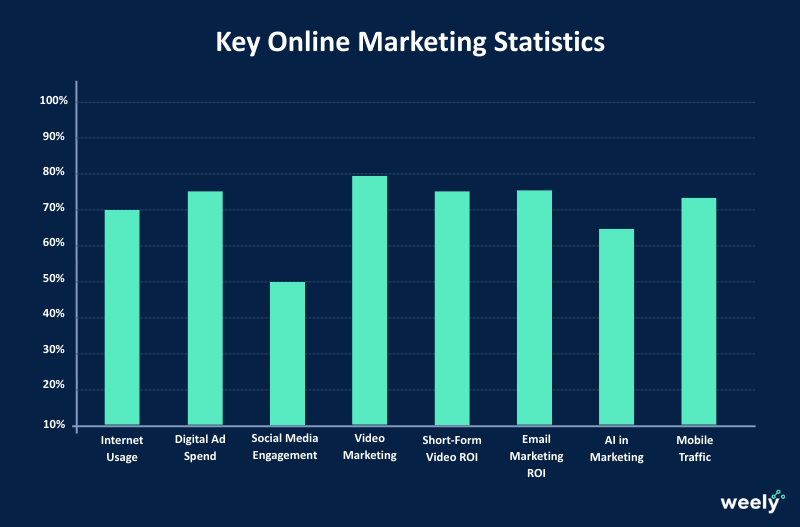
1. 70% of the global population uses the internet
There are about 5.5 billion people who use the internet right now. That is about 70% of the people in the world. The biggest place to reach customers is now on digital platforms. Businesses that look at online marketing statistics can see how people shop, browse, and talk to each other online. This helps them get more users and get more people to interact with their content.
2. Digital ads account for over 75% of global ad spend
Digital ads get more than 75% of all advertising money spent around the world. Most businesses now spend more money online than they do on TV, radio, or print. Businesses can see how many clicks, views, and conversions they get in real time with the help of digital marketing statistics. This helps campaigns get better results for every dollar spent quickly.
3. Users spend 2.5+ hours daily on social media
People log over 2.5 hours each day on social networking platforms. Instagram, TikTok, and YouTube are the apps that people pay the most attention to. Companies that use online marketing stats can make content that works for each platform. Social media gets people more involved, makes them more aware, and gets them to buy.
4. Video marketing increases conversions by up to 80%
Adding videos to campaigns can boost conversions by as much as 80%. Customers can learn about products better with short demos, tutorials, or explainer videos. People stay interested in videos longer than they do in text or pictures. Brands can use digital marketing statistics to find out which types of videos work best.
5. Short-form video delivers the highest content ROI
Shorter videos, like those under 60 seconds, often do better than longer ones. They get more shares, likes, and views. Short videos are great for social media. It helps brands get to their audiences quickly. Online marketing stats show that short videos get more people to interact with them and make more money.
6. Email marketing generates $36–$40 ROI per $1 spent
Email marketing makes a lot of money. You can get back $36 to $40 for every $1 you spend. Personalized emails work even better. Companies that keep track of marketing performance stats can send users messages that are relevant to them. This leads to more opens, clicks, and sales.
7. 65%+ of marketers use AI for digital campaigns
AI is helping 65%+ of marketers enhance their digital marketing campaigns through audience targeting, ad campaign optimization, and trend predictions. By using these tools together with digital marketing analytics, the marketer can create a campaign that is quick, smart, and effective. Reduces Wasted Spending. Businesses are also adopting AI-powered marketing analytics tools to improve campaign performance and ROI.
8. Mobile devices drive over 72% of online traffic
72%+ of total online traffic originates from mobile devices, such as mobile phones and tablets. To engage this audience effectively, you must provide a mobile-friendly website and mobile-friendly ads. Fast-loading digital marketing campaigns help create a better user experience. Mobile optimization improves engagement and conversions.
9. Voice search influences 40% of purchase decisions
Using voice search affects 40% of the purchases people make. Users use smart assistants like Google Home and Alexa to make purchases. Companies that optimize their sites for voice search can access a larger customer base than those who do not. Therefore, voice search has become an important statistic in e-commerce and online marketing.
10. Influencer marketing grows at 20%+ annually
Every year, influencer marketing grows by more than 20%. Micro-influencers often get more interaction than big stars. Brands that use influencer campaigns with digital marketing statistics can reach specific groups of people, gain their trust, and get more sales.
11. Paid search captures 45% of high-intent buyers
Paid search gets almost 45% of people who are ready to buy. When people look for certain products online, ads show up. Brands can use online marketing statistics to figure out where to put ads so that users are most likely to buy.
12. 90% of consumers research products online before buying
Approximately 90% of consumers do product research prior to purchasing. This is accomplished through reading reviews, comparing prices, and reading product guides. Marketers who document and track digital marketing analytics will be able to provide consumers with informative content that can influence consumers' purchasing decisions and thus increase marketer conversions.
13. Personalized marketing improves conversion rates by 20%
Personalized marketing makes more people buy things, which is a 20% increase. Showing the right content to the right people makes them more interested. Brands that use marketing performance data can make offers that are more likely to lead to more sales.
14. Retargeting ads increase conversions by up to 70%
Retargeted ads show products to people who have already been to your website. These ads help people remember things they looked at. Retargeting keeps brands in front of users and makes them want to come back. Up to 70% more people can convert.
15. Landing pages with video increase conversions by 86%
Video on landing pages boosts conversions by 86%. Videos make it easy to understand products and tell people what to do. Brands can use digital marketing stats to see which videos do the best. This helps the campaign do better.
16. Mobile ads drive 60%+ of digital ad conversions
More than 60% of people who click on an online ad do so on a mobile device. It's important to have mobile-first campaigns. Optimized mobile ads get to people where they spend the most time. They also make marketing performance numbers and ROI better overall.
Offline Marketing Statistics for 2026
In 2026, offline marketing is still very important. Businesses use statistics from offline marketing to find out which old-fashioned ways of advertising work best. Offline marketing helps people trust you, learn about you, and get strong leads. Adding QR codes to offline marketing connects offline campaigns to online audiences.
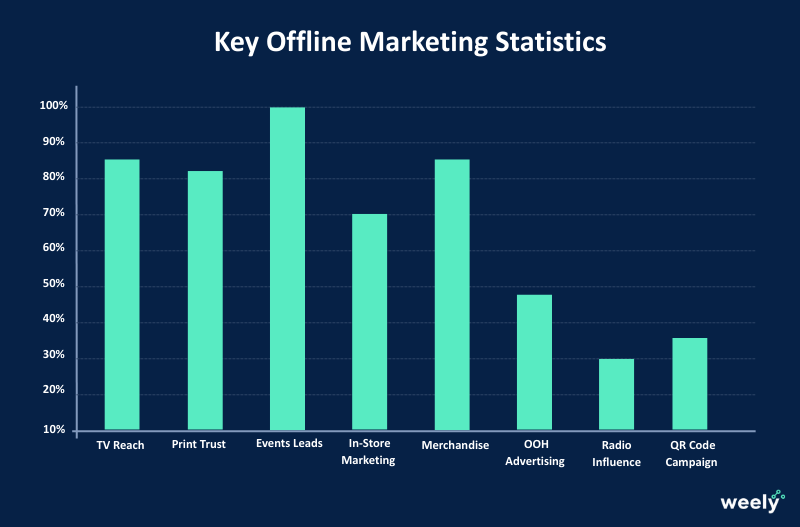
17. Offline marketing still holds 25% of total ad spend
Offline marketing accounts for 25% of the total ad spend. Television, radio, and print advertising are still in demand. Many traditional marketing statistics are being tracked by businesses so they can spend their ad budgets wisely and achieve better results.
18. TV advertising reaches 85% of households weekly
Many people watch TV. Every week, about 85% of homes watch TV. Brands can plan campaigns that reach millions of people by looking at offline marketing data. TV ads help people remember things and get to know them better.
19. Print ads are more trusted by consumers aged 45+
People still trust print ads a lot. People who are 45 and older like newspapers, magazines, and pamphlets. According to traditional marketing statistics, print ads make people trust and believe in a brand more.
20. Direct mail achieves 4%–9% response rates
Direct mail still works. The response rates range from 4% to 9%. Companies that use offline marketing stats can better reach their customers and find out which campaigns work.
21. Events generate 2× higher-quality leads than digital
Events bring in twice as many good leads as digital ads. To see how well they're doing, brands keep track of brand awareness metrics. Customers remember live events for a long time.
22. Radio advertising influences 30% of local buyers
Many people in the area listen to the radio. Radio ads affect about 30% of them. Brands can use offline marketing data to find customers who live nearby and get them to visit their stores more often.
23. OOH advertising boosts brand recall by 47%
Billboards and posters that are outside of the home help people remember a brand 47% more. Companies keep an eye on traditional marketing statistics to figure out where to put ads so that they get the most attention.
24. 82% of consumers trust print ads more than digital ads
Print has a great deal of trust among consumers. An estimated 82% of consumers feel that print advertising is more trustworthy than digital ads. Traditional marketing statistics enable brands to maintain their credibility and trustworthiness.
25. Branded merchandise increases brand recall by 85%
Promotional merchandise has a high rate of recall. Items like coffee mugs and T-shirts, as well as stationery, provide 85% increased brand recall. By monitoring brand awareness statistics, brands can assess which promotional items create recognition.
26. In-store marketing influences 70% of purchase decisions
Display advertising and signage, in-store demonstrations, etc. are very important. The influence of in-store marketing results in 70% of purchasing decisions. Using data from traditional marketing statistics, brands can enhance store layouts for increased sales.
27. Vehicle advertising generates 30,000–70,000 daily impressions
Vehicle advertising has an extensive reach. Car and truck advertisements generate 30,000 to 70,000 impressions per day. Traditional marketing statistics help brands measure the reach of their advertisements and assist in route planning.
28. Enhancing offline campaigns with QR codes
QR codes connect online and offline marketing. Brands can use QR codes in their offline campaigns to connect their print, packaging, and event materials to a website or landing page, which allows brands to track how effective an offline campaign is, how high of a return on investment the campaign had, and turn offline-audience members into online customers. Brands can also look into more advanced QR code marketing strategies that link events, print ads, and packages directly to digital campaigns.
Online vs Offline Marketing: Which Type Works Best?
Many businesses want to know this. Online marketing is effective. Marketing that isn't online works too.
Combining online and offline marketing yields optimal results. Both digital and traditional marketing can help businesses. Also, marketing statistics can help you figure out how to spend your money wisely.
Comparing Costs, Reach, Conversion, and Trust
- It costs less to market online. It gets to millions of people quickly.
- Offline marketing costs more. But it builds trust.
- TV, print, and events make people feel strongly.
- Statistics also show that online marketing has a higher return on investment (ROI).
- But offline marketing can build loyalty that online marketing can't.
Online Marketing: Easy to Track and Low Cost
- Quickly track clicks on online ads.
- The results show up right away.
- Paid search, social media, and email cost less.
- Also, statistics show that online drives 75% of ad results.
- That way, companies can quickly change and test ads.
Offline Marketing: Emotional and Memorable
- Marketing that isn't online feels personal.
- People remember events, print, and TV ads for a longer time.
- Also, statistics from the real world show that billboards increase recall by 47%.
- Store displays influence 70% of purchases.
- But offline builds trust that online can't match.
Best Strategy: Combine Online and Offline
- The best way to do things is to use both online and offline.
- This increases reach, trust, and overall results.
- Also, statistics show that using both increases ROI by 35%.
- People who see both spend 30% more.
- QR codes and URL tracking links also connect offline to online.
Tracking Offline Marketing with Digital Tools
In 2026 tracking offline marketing has never been easier: connecting digital and online results to offline campaigns is a snap with the tools available. Marketers can verify whether or not their offline campaigns were successful through offline-to-online links with QR code marketing, UTM tracking, and URL shorteners that help measure campaign results and determine their ROI. Marketers can update campaigns instantly using dynamic QR codes without reprinting physical materials.
29. QR Code Marketing Statistics
Brands that use QR codes get 35% more people to interact with them online. You can use a free QR code generator to link to websites from print, packaging, and events. You can also easily keep track of scans with a free QR code scanner. This shows which campaigns are the most effective.
30. UTM Tracking & Attribution Statistics
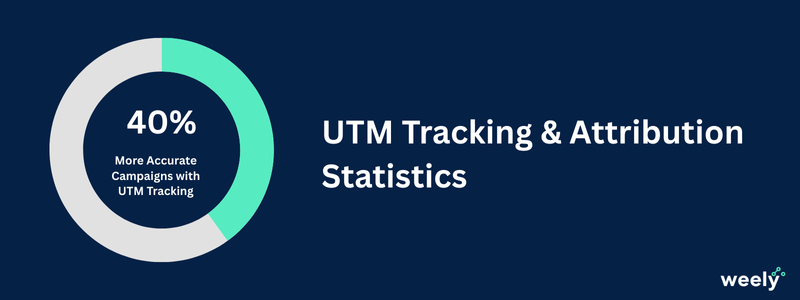
Using UTM link tracking makes campaigns 40% more accurate. Tracking is quick and easy with a free UTM builder. So, companies can tell which campaigns work. It also helps with better budget planning.
31. Short Links & Click Performance
Short links make people click on them 25% more often. Using a free URL shortener is also good for campaigns that are both online and offline. It's easy to share short links. They also let you keep track of people who come from print, events, or direct mail. Many marketers also rely on link management tools to track click performance and campaign results.
Omnichannel Marketing Statistics and Insights
The best way to market is to use both online and offline methods. People see brands all over the place. This makes people trust you. It also helps sales go up.
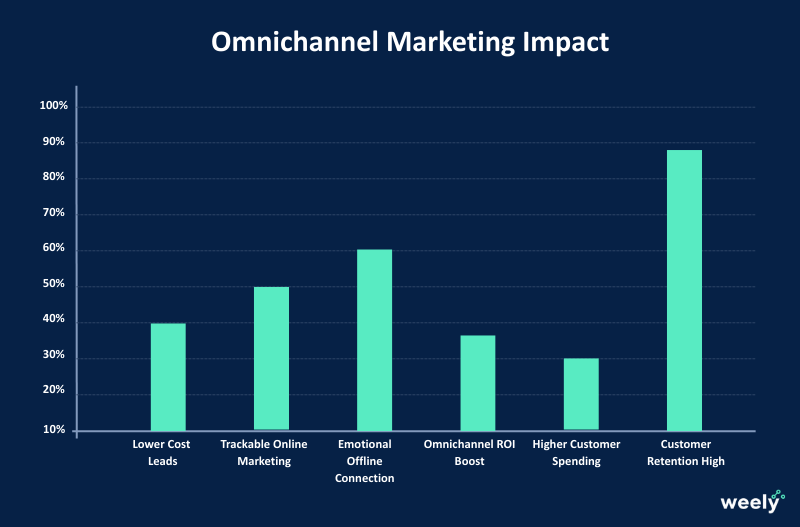
31. Digital Marketing Costs Less per Lead
It costs less to get leads through online marketing. Paid search, social media, and email cost less. Ads on the internet show click quickly. Businesses get results right away.
32. Online Marketing Is Trackable in Real Time
Online marketing provides fast data, allowing businesses to see clicks and sales immediately. Businesses can learn which advertisements work best for them. It seems as though businesses that market online enjoy a much higher return on investments than those that market offline.
33. Offline Marketing Builds Emotional Connections
Creating an emotional connection, or we could say building a passion for your products, happens through offline marketing. Television advertisements, print ads, events, and your store give the customer a direct memory of the products. Customers are likely to remember the offline marketing message much longer. Creating an emotional connection online is much more challenging than with offline advertising.
34. Omnichannel Campaigns Increase ROI
Using both online and offline marketing together increases ROI by 35%. People who see brands in many places spend 30% more. Customers stay loyal when they use both.
35. Omnichannel Customers Spend More
People buy more when they see a brand in many places. They are more loyal. They like QR codes, short links, and tracking links better.
36. Businesses Using Omnichannel Marketing Retain Customers
Using both online and offline marketing keeps people around longer. Companies that use both keep 89% of their customers. They also get more people to interact with them everywhere.
What These Marketing Statistics Mean for Businesses in 2026
Businesses use stats about marketing. They make good decisions. Data from the internet shows results. Offline data is helpful too. It also helps with making budgets. It's easy to keep track of customers.
- Make a budget for 2026 using marketing data.
- Utilize QR code tracking to monitor customer behavior.
- Use marketing performance data to help you make decisions.
Companies can also see what works. Tools like QR codes, UTM tracking, and URL shorteners connect the online and offline worlds. That's why businesses keep track of ROI. They grow quickly.
Conclusion
In 2026, marketing is all about data. Businesses use marketing statistics.They make plans for campaigns. They make ROI better. Online channels don't cost much. You can measure them. Offline channels help people trust you. They make connections.
The best results come from omnichannel marketing. It mixes online and offline. QR codes link print, events, and packaging to websites. UTM tracking measures campaigns. URL shorteners make links easy. Weely AI makes analytics fast.
Brands also use analytics tools to find out what works. So, strategies help businesses grow. They make people more interested. They make people more loyal.
Frequently Asked Questions About Marketing Statistics in 2026
What are the latest marketing statistics for 2026?
Companies use marketing data for 2026. They plan their campaigns well. These statistics also show how online, offline, and omnichannel marketing are changing.
How does AI help in digital marketing campaigns?
AI helps keep track of results and improve ads. It can also guess what will happen next. AI saves time and makes digital campaigns more profitable.
What is the difference between online vs offline marketing statistics 2026?
Online stats show how many people clicked, how many people converted, and how much traffic there was. Offline stats show how well people remember and trust a brand. Both kinds help with planning campaigns.
How can QR codes for offline marketing improve results?
QR codes connect print, packaging, and events to websites. They record how involved people are. QR codes also make customers do more.
How to use UTM tracking and URL shortner for campaigns?
To find out where your traffic is coming from, use a UTM builder. A URL shortener makes it easy to share short links. They also keep track of clicks.
What are the top digital marketing statistics 2026 every business should know?
Email ROI, social media engagement, influencer growth, and trends in mobile traffic are some of the most important stats. These insights help with campaigns and budgets.
How does omnichannel marketing improve customer engagement and ROI?
Omnichannel marketing uses both online and offline channels. Customers spend more and stay with you. Tools for tracking help you do better and get better results.