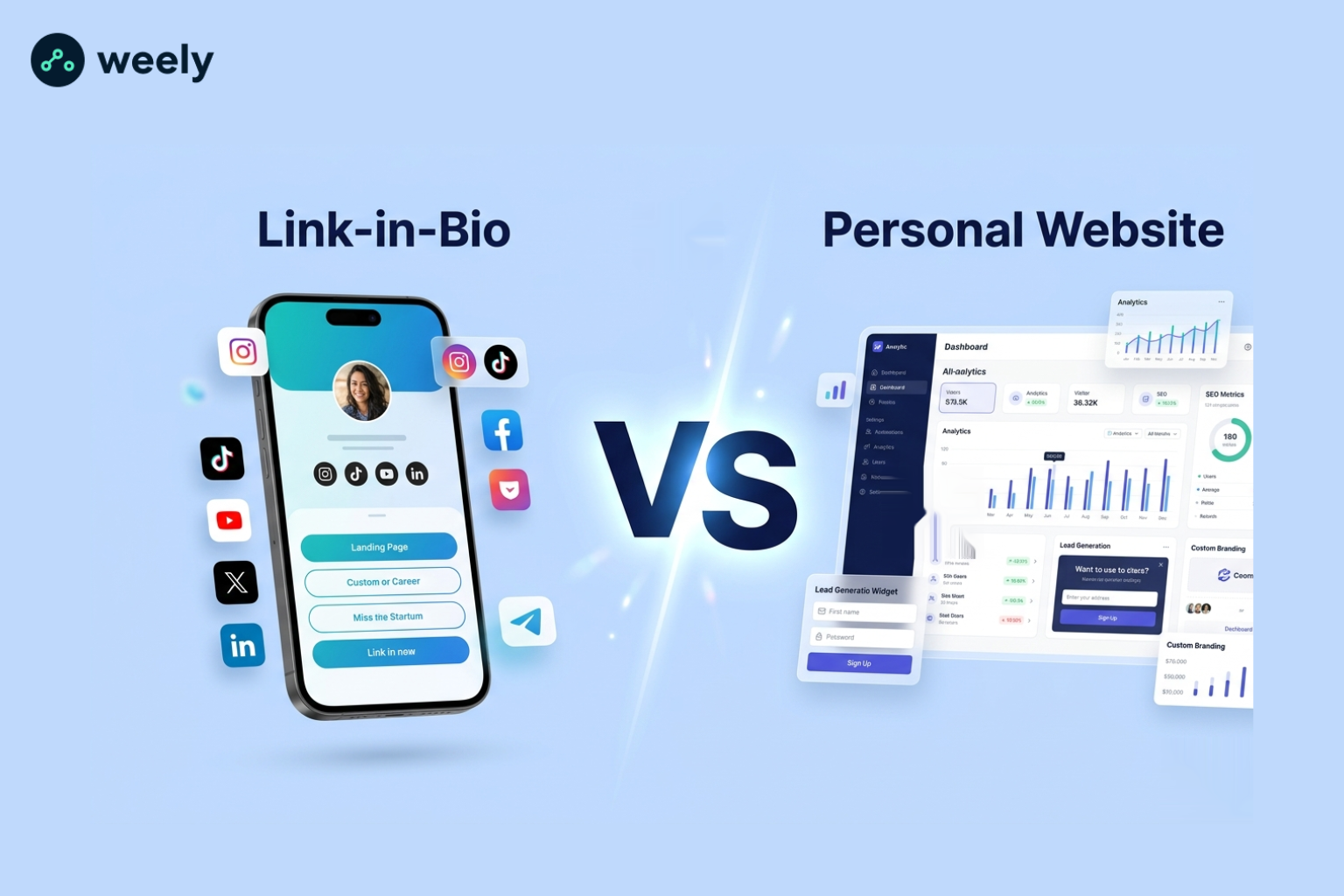
Building an online identity has changed a lot in the last few years. Today, link-in-bio tools are the starting point for most creators, freelancers and small businesses. The tools are easy and quick. But as their brands expand, many of them begin developing personal websites.
This scenario raises a very important question in today’s digital marketing:
Should you rely on a link-in-bio page or invest in a personal website?
This blog will explain both of these options in detail. You’ll discover the way they work, the pros and cons, their SEO impact and when to use each. This will help you to choose the right digital strategy for your growth.
What Is a Link-in-Bio Page?
A link-in-bio page is a simple landing page with multiple links all in one place. Instead of sharing a single destination, a link-in-bio tool allows users to create a central hub where visitors can find websites, products, blog posts, social profiles, videos, newsletters, and other important resources.
The idea took off because social media sites like Instagram, TikTok and X only allow one profile link. A link-in-bio solution takes followers to a dedicated link-in-bio page, allowing users to squeeze the most out of that one opportunity.
Why Link in Bio Pages Are Popular
As social media marketing has grown, the link-in-bio method has become essential for many creators and businesses. A link-in-bio page allows the audience to navigate more easily and improves the user experience.
There are a variety of reasons why the link-in-bio model is popular:
- Social platforms often restrict profile links.
- A link-in-bio page is easy to create.
- Most link-in-bio tools are mobile-friendly.
- A link-in-bio page helps centralize content.
- Many platforms that use a link in bio also have analytics and monetization.
These benefits have made the link-in-bio method a common practice for creators and brands, with many relying on link management tools to simplify audience navigation and improve engagement.
Common Use Cases
"Link in bio" solutions work for many different audiences.
Creators post videos, podcasts and newsletters on a link-in-bio page. Influencers promote affiliate products via a link-in-bio tool. Link-in-bio pages are a great way for small businesses to showcase services and promotions. Freelancers use a Link in bio hub to show off portfolios and contact information.
In all cases, the link-in-bio is a center point for traffic destinations.
What Is a Personal Website?
A personal website is a wholly owned web property. It is your brand, business or profession identity. Unlike a link-in-bio page, a website can contain many pages. It can also have blog posts, resources, forms, products and advanced functionality.
A link-in-bio tool is all about gathering links. A personal website, on the other hand, offers the whole digital experience.
Why Personal Websites Matter
A personal website offers several advantages. The perks are more than a simple link-in-bio page.
First, a website gives you full ownership. Your website is not a third-party service like a link-in-bio platform. This allows you more control over your content and your brand.
Second, a website can rank on search engines. A link-in-bio page isn’t great for SEO. But a website can earn organic traffic with optimized content. It can also increase your online visibility to a wider audience.
A website lends credibility, too. The link in your bio allows users to visit your content, but a professional website often improves a first impression. Such sites can help build trust more quickly.
Types of Personal Websites
There are many personal websites.
- Portfolio websites
- Personal branding websites
- Resume websites
- Blog websites
- Consulting websites
- Ecommerce websites
- Membership websites
Any of these can be combined with a link-in-bio strategy. Alternatively, consider removing your link-in-bio page entirely. Then you have the choice to choose what best suits your goals.
Pros and Cons of Link-in-Bio Tools
Link-in-bio tools are convenient, flexible and accessible. But they also have drawbacks. However, even the best link management tools come with certain drawbacks that users should consider.
Advantages of Link-in-Bio Tools
Many creators prefer link-in-bio solutions because they make it easier for audiences to navigate and connect with them.
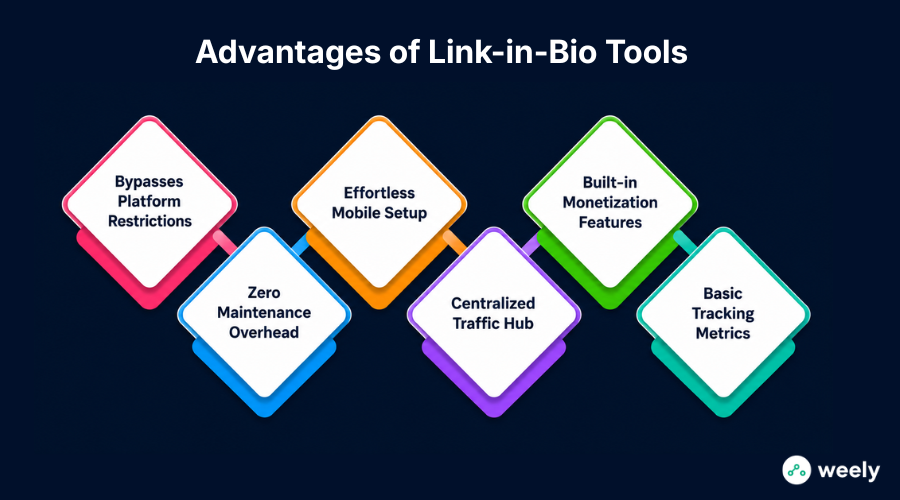
Bypasses Platform Restrictions
The main advantage of a link-in-bio tool is simplicity. Social platforms usually only give one profile link. Hence, a Link-in-bio page helps users overcome this limitation.
Zero Maintenance Overhead
Link-in-bio solutions are very low maintenance. Most updates take just minutes. A link-in-bio page does not require hosting management or technical updates, unlike a website.
Effortless Mobile Setup
Most of the services behind “link in bio” are optimized for mobile. Plus, a link-in-bio page usually doesn’t require any coding.
Centralized Traffic Hub
The link in the bio is a traffic hub. Instead of several shorten URLs, you can direct followers to a single link-in-bio page with all of them.
Built-in Monetization Features
Many modern link-in-bio tools support affiliate links, digital products, donations, subscriptions and creator monetization. As such, a link-in-bio page can be a revenue-generating asset.
Basic Tracking Metrics
Most link-in-bio tools provide analytics. For instance, a Link-in-bio page usually provides click-tracking, visitor data, and performance insights.
Disadvantages of Link-in-Bio Tools
Link-in-bio tools are convenient, but they have their limitations.
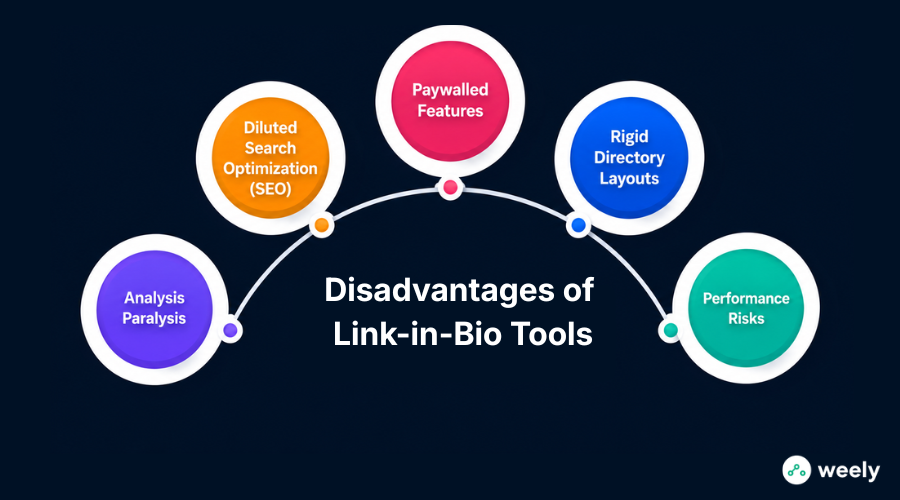
Analysis Paralysis
A link in bio can get cluttered. Visitors can get confused when there are too many options on a link-in-bio page. They have to decide what to click on.
Diluted Search Optimization (SEO)
Generally, a link-in-bio page has limited SEO potential. A link in bio works well for social media traffic but doesn’t typically provide much organic search visibility.
Paywalled Features
There are many link-in-bio providers that hide advanced features behind premium subscriptions. Therefore, a free Link-in-bio page may have certain limitations.
Rigid Directory Layouts
A link-in-bio tool can limit your design flexibility. The layout of most of the link-in-bio page themes is the same.
Performance Risks
The link in your bio is run by a different service. If something goes wrong with the platform, your link-in-bio page may become unavailable.
Pros and Cons of Personal Websites
Personal sites allow you more control. They offer more growth opportunities. Plus, it help you make your business known. But they do take time and regular work.
Advantages of Personal Websites
A personal website offers flexibility, ownership and credibility. It's helping people and businesses to build a strong and lasting online presence.
Complete Ownership
A website grants you ownership. Your content is yours. Unlike a link-in-bio platform, it is not governed by a third party. You can change the content anytime.
Unlimited Customization
A website is more flexible than any Link-in-bio page. You can tailor layouts, branding, navigation and user experiences.
Maximum SEO Authority
Websites are better for SEO than link-in-bio tools. They can rank for key words. It can get people to visit your site. They can develop authority over time as well. This ensures long term growth.
Advanced User Tracking
Websites have complex analytics. They give you more data than most link-in-bio pages. By tracking each UTM link, you can gain deeper insights into traffic sources, campaign performance, and user behavior. If you know how people act, you can better serve them.
Professional Credibility
A professional website builds trust. It often looks better than a simple link-in-bio page. It may make visitors trust your brand more.
No Algorithm Dependency
Websites do not rely on social media algorithms. This allows you to have more control over your reach and visibility.
Disadvantages of Personal Websites
There are advantages to personal websites. But they take work, too. Domain, hosting and design. Setting everything up takes time.
High Setup Time
It takes time to make a website. You want to design the structure. Design pages and populate with content before launch.
Ongoing Maintenance Costs
Websites need hosting, domain renewal and occasional updates. However, these costs are ongoing, however minor they are.
Steep Learning Curve
Building a website can be tough for beginners. It takes time to learn hosting, SEO and design tools.
Manual Optimization Required
Websites need to be optimized regularly. You need to make SEO, speed, and sales better. Which produces better results.
Security Vulnerabilities
Websites can be hacked and infected with malware. There are regular updates. The site is also very safe.
What Can a Personal Website Do That Link-in-Bio Can't?
A personal website has a more profound purpose. It also provides more branding opportunities. It makes it more owned. Besides simple links, it works for long-term growth too.
SEO and Organic Traffic Power
The link in your bio primarily targets existing audiences. But a site can reach new audiences through search engines. This can help you get in front of people who have never been to your social profiles before. And search visibility can generate steady traffic over time.
Full Content Creation System
A link-in-bio page normally contains links. A website, on the other hand, allows you to publish the following:
- Blogs
- Articles
- Guides
- Case studies
This approach allows you to pass valuable information on to your audience. The process also helps you to build authority in your niche and gain visibility. Additionally, it can gradually enhance your online presence over time.
Business and Monetization Features
A link in bio can help with basic monetisation, but websites can do e-commerce stores, memberships, bookings and email marketing systems. These features allow you to create several revenue opportunities as well. In addition, branded short links boost ROI by increasing brand recognition, improving click-through rates, and creating a more professional user experience. With a larger audience, a website can support more complex business objectives.
Head-to-Head Comparison: Link-in-Bio Tools vs Personal Websites
Choosing between a link-in-bio tool and a personal website depends on your goals. Both will help you establish a presence on the web. However, they serve distinct purposes.
Ease of Setup
Building your link-in-bio page is easy. Platforms often let you link a bio in minutes. Another thing is that you don't need any special skills.
Building a personal website takes longer. You will need a domain name and hosting. You need to make a design for the website too. So the setup is longer.
Customization and Branding
With a Link-in-bio page, the options are clear. For example, you can change the profiles' images, fonts, and colours.
But a personal site is far more liberating. You can create your own layout and even customize elements such as branded links vs generic links to better reflect your brand identity. Additional tools can be added as needed. Your business will stand out more because of this.
SEO and Traffic Growth
A link in the bio takes your followers to your content.
But a personal website can show up in search results. It can generate organic traffic. It can also help you reach new people over time.
Cost and Investment
Many link-in-bio page tools provide free or low-cost plans. This makes them good for many users.
Meanwhile, a personal website is pricier. You’ll need hosting and a domain name. Some maintenance costs may apply. But it can still add value over time.
Ownership and Control
You’ll need a third-party service to have a link-in-bio platform.
But with a personal website, you are in complete control. Your content is yours. Your brand is as individual as you are. You can also create custom vanity URLs that reinforce your brand identity and make your links more memorable. Your data is yours, so you have more freedom. So, a website is a good way for long-term growth.
When Link in Bio Is Enough
If you’re just starting out, a link-in-bio tool is all you need.
It is most effective when:
- Starting stage of content creation or personal branding
- Heavy reliance on social media platforms for traffic
- Short-term promotions or campaign-based marketing
- Requirement for quick setup without technical effort
That’s also why link-in-bio tools for Instagram are still very popular, as they make it easier to share and manage short links on social media while directing followers to multiple destinations from a single profile link.
When You Need a Personal Website
A personal website is important if you want to be successful long-term. It helps you build your brand. In the long run it can also bring traffic from search engines.
If you might like:
- Focus on long-term brand building and authority
- Need for consistent organic traffic from search engines
- Development of a professional digital identity
- Intent to scale monetization through multiple channels
Also, many users are wondering if it's worth it for authors to have a personal website in 2026, and they've decided to build one. You are in charge when you have a website. It gives confidence. Plus, it adds new ways to make money.
The Best of Both Worlds (Hybrid Strategy)
You don’t always have to pick one.
Often a hybrid approach is the best option.
You can use:
- Link-in-bio tools for social traffic
- Personal website for conversions and branding
The combo is great for link-in-bio tools for small business owners and creators.
How it works in practice
- Traffic is driven by social media
- Link in bio captures clicks
- Website converts visitors into customers
This makes for a strong online sales process.
Final Verdict
A link-in-bio page is great for creators, influencers, and businesses. Setup is simple and fast. It allows you to keep all your links in one place.
But for the long run, a personal website is better. It helps with branding, with SEO and with trust. It also helps grow a business. You are in control when you use a website. It also gives you more arms reach. There is nothing like it.
The best plan for most professionals is to use both. For social media traffic, provide a link in your bio. Then direct users to your website. Your site now is your home base. This gives speed and long-term growth.
Frequently Asked Questions
What are link-in-bio tools?
Link-in bio-tools are platforms that allow users to share multiple links from one page. They’re used on Instagram, TikTok and Twitter. They make link sharing easy and tidy.
What is a personal website?
Your own little piece of the internet, with your custom domain name. You can present your brand, portfolio, services, blog and contact details there. Additionally, you are in complete control of it.
Which option has more customization: a link-in-bio tool or a personal website?
Personal websites allow for more control over design, layout and features. Almost anything can be changed. Bio-link-only tools have limited templates and control.
Which is better for branding: a personal website or link-in-bio tools?
Personal websites are more about branding. These look professional and are different. They help you develop a strong identity over time. Tools in the link in the bio work better for quick traffic.
Which is a more cost-effective link in bio tools or a personal website?
Link-in-bio tools are less expensive. Many have free or low-cost plans. Generally, personal website costs are higher due to domain, hosting and design.