Barcodes are going through their most significant change in fifty years. The organization behind the barcode you scan at every checkout, GS1, is driving a global initiative called Sunrise 2027 to move retailers from old-style barcodes to smarter 2D codes. The numbers behind this shift are difficult to ignore. Forty-eight countries, accounting for approximately 88% of global GDP, are already piloting the transition. Industry research shows nearly four out of five shoppers say they are more likely to buy a product when a scannable code gives them extra detail on sourcing, allergens or sustainability. One standard sits at the heart of this shift: GS1 Digital Link QR codes.
If you’ve seen a “QR Code Powered by GS1” logo on packaging, or you are trying to understand what your brand needs to do before 2027, this guide breaks down exactly what GS1 Digital Link QR codes are, how they work, and how businesses are already using them.
What Are GS1 Digital Link QR Codes?
A GS1 Digital Link QR code is a 2D barcode that encodes a standard web link (a URI) containing a product's GS1 identifiers, such as its GTIN, batch number, or serial number. It can be scanned by any smartphone camera and taken directly to a web page, but retail scanners can also read the same code for checkout, so one QR code can do more than one job. A GS1 Digital Link QR code builder allows businesses to build and preview this kind of code before printing it on any packaging.
GS1 Digital Link Explained in Simple Terms
A traditional barcode is like a name tag. It identifies a product, but that’s it. A GS1 Digital Link QR code is more like a door that has a name tag on it. It still carries the product’s identity, but it also adds a web address that can lead to ingredient lists, directions for use, recycling information, promotions, or authentication tools. The GS1 Digital Link standard specifies the exact structure of that web address so that any system, anywhere in the world, can read it in a consistent manner.
What Makes a GS1 Digital Link QR Code Different?
A regular QR code can link to any URL the business wishes, and there is no required structure. A GS1 QR code is based on the GS1 Digital Link standard, meaning the URL itself includes structured, machine-readable identifiers (for example, a GTIN) in a predictable pattern. That structure allows the same code to work for a retail scanner at checkout and a curious shopper's phone, without requiring two codes on the package.
How GS1 Digital Link Connects Products to Online Information
Every physical product has a GS1 identifier in its barcode. Digital Link takes that same identifier and maps it to a standard, resolvable web link. And when that link is there, a business can tie it to just about anything: a product detail page, a traceability record, a warranty registration form, or a customer support chatbot. One scannable 2D barcode now permanently connects the physical product to its digital information.
GS1 Digital Link QR Codes vs. Traditional QR Codes
The main difference is the structure and standardization. A traditional QR code is a blank canvas; the business decides the destination and format, with no shared rules across brands. A GS1 Digital Link QR code is based on a published, global standard, so the same interpretation will be applied to it by any GS1-compliant system, whether it is scanned in a supermarket in Tokyo or a pharmacy in Berlin. That consistency is exactly why retailers, regulators, and standardizing around it instead of ad-hoc QR codes.
How Do GS1 Digital Link QR Codes Work?
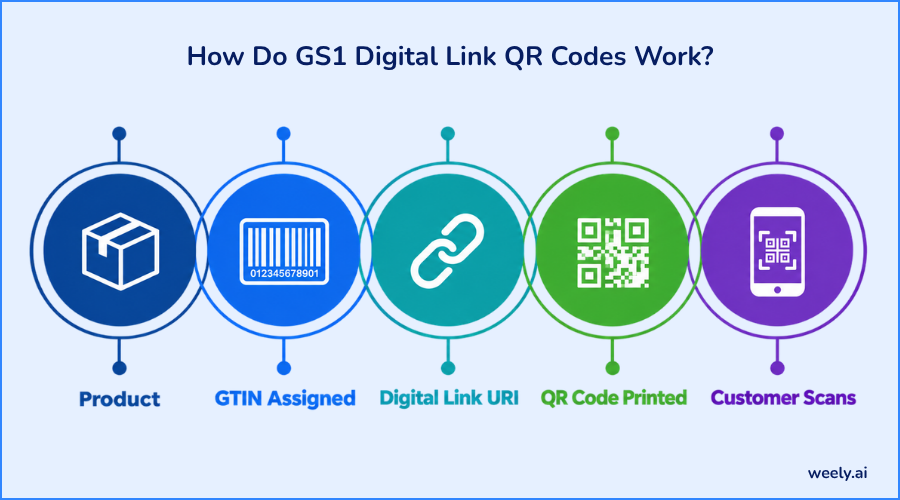
GS1 Digital Link QR codes work by encoding a product's GS1 identifiers into a structured web URI, which is then converted into a scannable 2D barcode. When scanned, the code either takes you to a web page (for consumers) or is read directly for its embedded data (for point-of-sale and supply chain systems). Before publishing a code, it's worth using a tool to test how a QR code resolves across different devices and apps.
How Product Identification Works
All products with a GS1 barcode begin with a Global Trade Item Number or GTIN. This number is unique to the product and the packaging level: one piece, one case, or one pallet. The GTIN is the basis on which everything else in a GS1 Digital Link QR code is built.
Understanding the GS1 Digital Link URI
The GS1 Digital Link URI is a web address formatted in a specific way, usually a domain followed by the GTIN, and any additional identifiers such as batch, lot or serial number. The pattern is standardized so that any system that understands GS1 Digital Link syntax can extract the GTIN and other data from the link itself without having to look anything up first.
How a QR Code Connects to Product Information
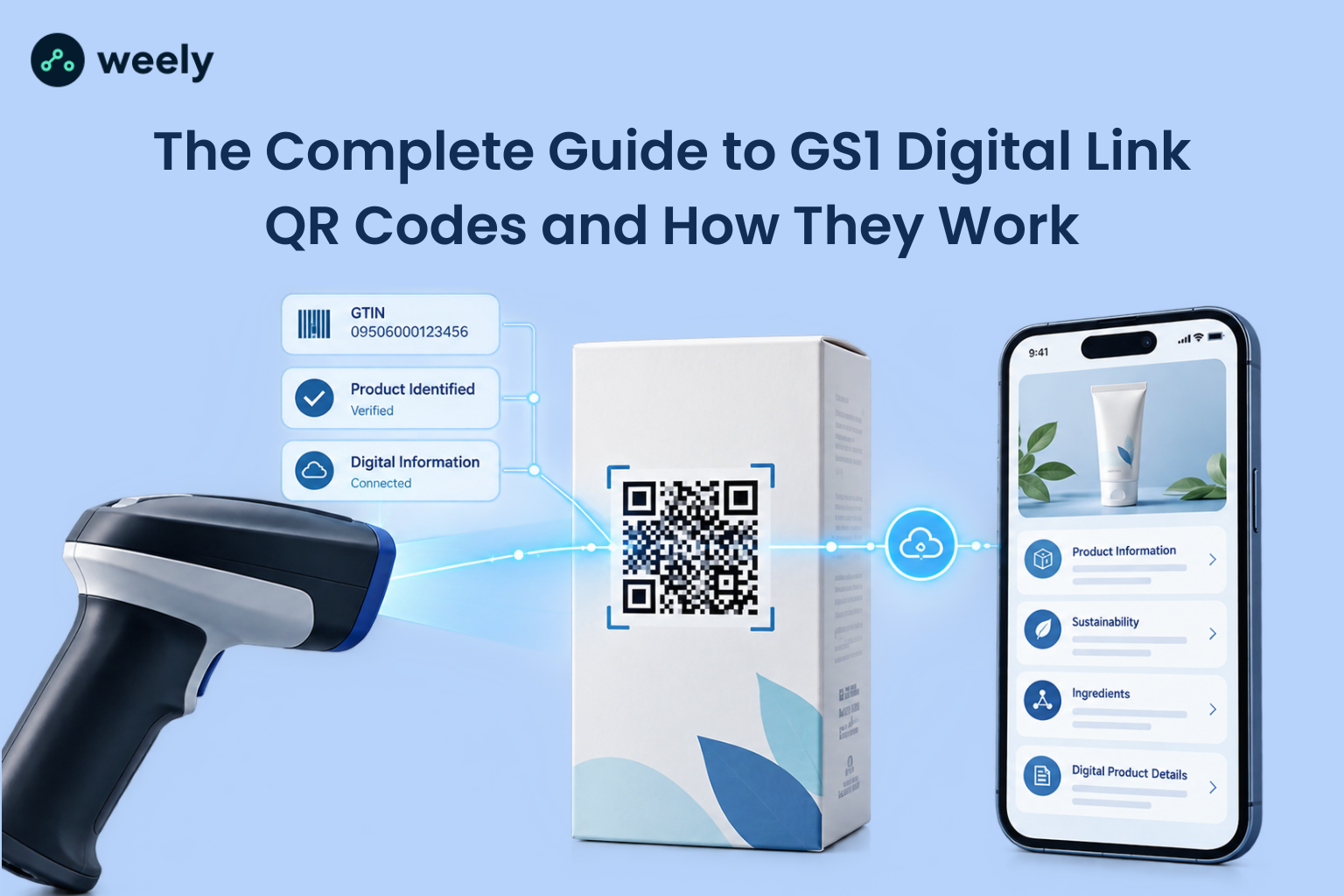
Once the Digital Link URI is created, it is encoded into a QR code (or another 2D barcode format such as GS1 DataMatrix). The QR code itself doesn't actually store the product info; it stores the link. That link is the actual link that connects the physical product to whatever digital content a business chooses to publish or update behind it.
The Role of a GS1 Digital Link Resolver
A resolver is the infrastructure that determines where a scan should direct a person. The resolver looks at who is scanning, whether it’s a consumer app or a retail POS system, and sometimes factors like location or language, and when a customer scans the code, sends them to the most relevant destination: a product page, a recall notice, or a loyalty offer.
What Happens When a Customer Scans the QR Code?
It’s simple for the shopper, though a number of standards are working behind the scenes to make it happen:
- A product is assigned a GS1 identifier (its GTIN).
- That identifier is structured into a GS1 Digital Link URI.
- The URI is encoded into a QR code and printed on the packaging.
- A customer scans the code with a smartphone camera.
- The resolver sends them to the relevant product information, page or digital experience.
What Information Can a GS1 Digital Link QR Code Provide?
There's so much more than a price look-up in a single GS1 Digital Link QR code. The underlying data model is flexible, such that one product information QR code can enable several entirely different use cases simultaneously, all from the same printed symbol. This is particularly useful across packaged product information pages where one code is required to serve several different audiences.
Product Details and Specifications
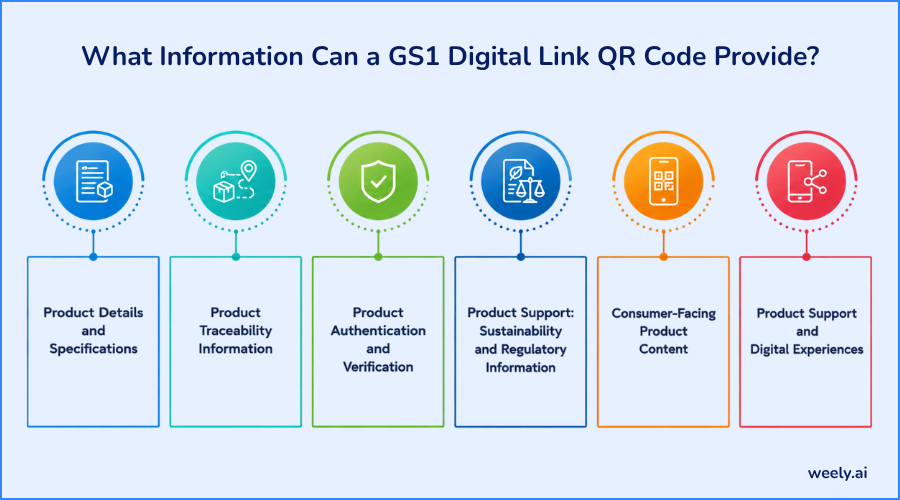
Shoppers can view complete specifications, ingredient breakdowns, sizing charts or usage instructions that would never fit on a physical label. Space is at a premium on small packaging.
Product Traceability Information
The code itself can be tied to batch numbers, harvest dates, and origin information, providing consumers and regulators a transparent traceability QR code that shows where a product originated and travelled through the supply chain.
Product Authentication and Verification
Because each unit can carry a unique serial number within its digital link, brands can offer a product authentication QR code that helps shoppers and retailers confirm a product is genuine, which is especially valuable in categories prone to counterfeiting like cosmetics, electronics, and pharmaceuticals. QR codes on tickets already utilize this same serialization logic, employing a unique code per unit to confirm authenticity at entry.
Product Support: Sustainability and Regulatory Information
Regulatory disclosures, recycling instructions, allergen warnings and sustainability certifications can all be made available behind the same scan, allowing brands to meet growing transparency requirements without having to redesign packaging every time a regulation changes.
Consumer-Facing Product Content
But it’s more than simply meeting the requirements: brands can use the same product information QR code to serve lifestyle content, recipes, styling guides, how-to videos, or loyalty program sign-ups, turning a functional barcode into part of the marketing experience.
Product Support and Digital Experiences
Warranty registration, troubleshooting guides, and direct links to customer support can also be behind a GS1 Digital Link QR code, removing the need for separate manuals or support stickers on the product itself.
Benefits of GS1 Digital Link QR Codes
The appeal of GS1 Digital Link QR codes comes down to one idea: a single, standardized code can now do the work that used to require multiple separate barcodes, labels, or QR codes. Many of these gains are easiest to see in product packaging QR code examples, where one printed code now covers checkout, traceability, and consumer content at once.
Connect Physical Products With Digital Information
For every unit sold, a bridge is built between the physical shelf and the company's digital ecosystem, without the customer needing to search for anything manually.
Improve Product Transparency
GS1 Digital Link QR codes make it that much easier to provide honest, detailed product transparency at scale, across an entire catalog, because the underlying data can be as detailed as a business wants.
Support Product Traceability
When a shopper scans a product’s code out of curiosity, they’re using the same information that supply chain partners, auditors, and regulators can use to trace a product’s journey, which greatly simplifies compliance and recall management.
Enable Richer Consumer Experiences
Brands can deliver dynamic, evolving content behind the same printed code, rather than a static label, and adapt the experience over time without ever reprinting packaging.
Support Smart Packaging
That’s precisely the kind of link between a physical item and a digital layer on top of it that smart packaging initiatives need, and GS1 Digital Link is rapidly becoming the standardized backbone for that link across industries.
Reduce Dependence on Traditional Barcodes
A GS1 QR code can carry the checkout functionality of a 1D barcode and the rich data of a URL, helping to gradually reduce the number of separate codes that need to be printed and managed.
Create More Flexible Product Information Experiences
Perhaps most importantly, the destination behind a GS1 Digital Link QR code can be updated at any time. The printed code never has to change, even when the information behind it does.
GS1 Digital Link QR Codes vs. Traditional QR Codes
Businesses comparing the two formats often start with a broader QR code vs barcode breakdown before narrowing in on GS1's structured standard. Once the basic differences are clear, most teams move on to building, and testing their GS1-ready QR codes to see how the standard behaves in practice.
What Is a Traditional QR Code?
A traditional QR code is an open format that simply stores whatever data a business chooses to encode, most often a plain URL. There is no shared industry standard governing what that URL should look like or what data it must contain.
What Is a GS1 Digital Link QR Code?
A GS1 Digital Link QR code is a QR code whose underlying data follows the GS1 Digital Link standard, meaning it carries structured, standardized product identifiers as part of a resolvable web address.
Key Differences Between GS1 and Traditional QR Codes
- Structure: Traditional QR codes have no required format; GS1 Digital Link QR codes follow a published global syntax.
- Interoperability: A GS1 QR code can be read consistently by any GS1-compliant system worldwide, while a traditional QR code only works the way its creator designed it.
- Dual purpose: A GS1 Digital Link QR code can serve both point-of-sale scanning and consumer engagement from one symbol; a traditional QR code typically serves only the latter.
Which Type of QR Code Is Better for Product Information?
If your focus is in retail, compliance or supply chain data, then the GS1 Digital Link QR code is the better choice, as it is purpose-built for this and is recognized across systems and borders worldwide. A basic QR code is still useful for simple, one-off marketing links that don’t need to convey structured product data or function at checkout.
GS1 Digital Link vs traditional barcodes: GS1 Digital Link QR codes contain dramatically more data than legacy EAN and UPC barcodes, can be two-way scanned by machines and people, and can be updated after printing; something a static 1D barcode vs 2D barcode comparison always comes back to.
GS1 Digital Link QR Code Use Cases
The applications below span everything from a single shelf label to an entire supply chain. Brands in packaged goods often start with QR codes for consumer goods and packaged products, while retailers exploring checkout and in-store engagement usually look at QR codes for retailers first.
Retail and Consumer Products
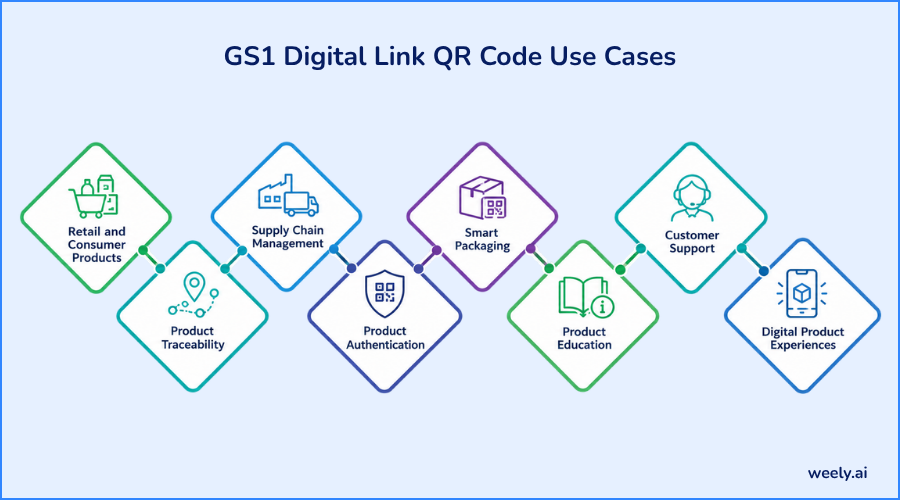
Retailers are using GS1 Digital Link QR codes to provide consumers with immediate access to rich product content right from the shelf, while still allowing for traditional checkout scanning.
Product Traceability
Food, pharmaceutical, and agricultural brands use these codes to trace batches from origin to shelf, giving companies and regulators a reliable supply chain QR code system.
Supply Chain Management
In addition to consumer-facing use, GS1 Digital Link also supports internal logistics, inventory tracking, and partner data sharing across complex, multi-tier supply chains.
Product Authentication
Luxury goods, electronics, and pharmaceutical brands employ unique serialized codes to combat counterfeiting, and offer customers a simple way to verify authenticity.
Smart Packaging
The GS1 Digital Link QR code is becoming a core smart packaging QR code element for packaging designers planning to integrate digital content into the design process from day one.
Product Education
For complex or regulated products, such as supplements, appliances, and industrial equipment, the code can be used to deliver instructional content that would typically require a bulky printed manual.
Customer Support
A single scan can take a customer straight to troubleshooting steps, warranty registration, or a live support channel, cutting down on support calls for common questions.
Digital Product Experiences
Taken together, these use cases point toward the same destination: every connected product QR code becomes an entry point into a broader digital product experience, not just a lookup tool.
How to Create a GS1 Digital Link QR Code
Building your first code is easier with the right tools in place. A free QR code generator is a good starting point for producing the initial code and an online QR code scanner makes it simple to double-check that everything resolves correctly before it goes to print.
Step 1: Identify Your Product
Start with your product GTIN and any other identifiers you want to add, such as batch or serial numbers. This is what the rest of the code is built upon.
Step 2: Prepare Your Product Information
Think about what will be behind the link before you make it; specs, traceability info, sustainability information, or support resources; so when the code is live, the destination is ready to go.
Step 3: Create the Digital Link
Use the official syntax rules to format your identifiers as a GS1 Digital Link URI, so the link is compliant and readable by any system that supports GS1 standards.
Step 4: Generate the QR Code
Once you have settled on your Digital Link URI, use a GS1-compliant generator to create a QR code that meets the GS1 technical requirements for size, contrast, and error correction.
Step 5: Test the QR Code
Test the rendered code in a variety of devices, and apps to make sure it resolves correctly and the resolver consistently takes users to the right destination.
Step 6: Connect It to Your Digital Product Experience
Connect the resolver to your live product page, traceability system or digital assistant, and make sure that the experience is what you designed in the prep stage.
Step 7: Monitor and Improve the Experience
Measure how often the code is scanned, where it’s scanned, and what people do with it afterward, and use that measurement to continually improve the code’s content and experience over time.
GS1 Digital Link QR Code Requirements and Best Practices
Good execution depends as much on placement as on the code itself. For small or curved surfaces, following best practices for QR codes on stickers and labels minimizes scanning issues, and a flexible QR code platform ensures the destination content remains accurate.
Use Correct Product Identifiers
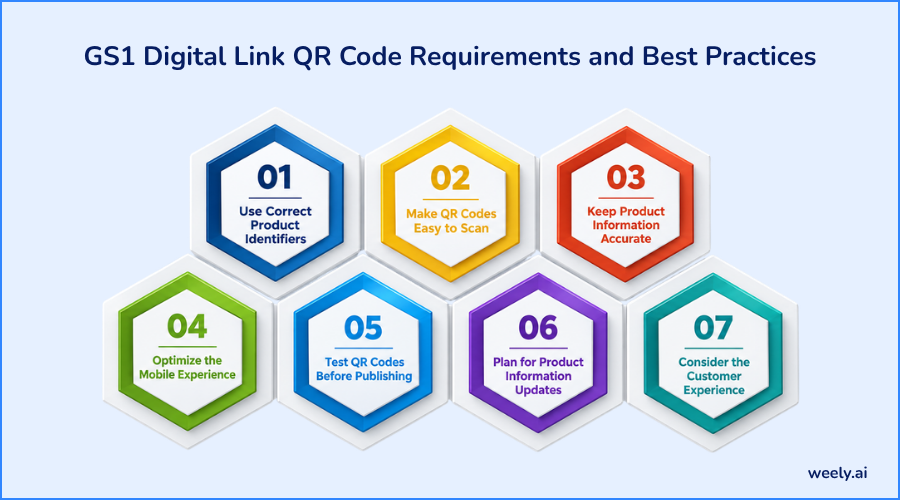
Digital links must be built on verified, accurate GS1 identifiers. An incorrect GTIN breaks each use case that is built on top of the code.
Make QR Codes Easy to Scan
Follow GS1 sizing and contrast guidelines to ensure reliable code scanning on packaging, shelf labels, and digital displays even in poor lighting conditions.
Keep Product Information Accurate
But because the destination behind the code can change, businesses need a process for keeping that content accurate and up-to-date, especially for compliance-related information.
Optimize the Mobile Experience
Since most scans will occur on a smartphone, ensure that the destination page loads quickly and appears visually appealing on a small screen.
Test QR Codes Before Publishing
Always test on real packaging under real lighting conditions before mass production, not just on a screen mockup.
Plan for Product Information Updates
Develop clear internal procedures on who updates content behind each code and how often so information doesn’t go stale after launch.
Consider the Customer Experience
Every design decision should be evaluated by one question: does the change make the moment after a scan more useful to the person holding the phone?
How AI Can Enhance GS1 Digital Link QR Codes
This shift is part of a larger trend covered in depth in AI-powered QR codes in 2026, where static codes are increasingly paired with responsive digital layers. The same idea extends beyond packaging too; brands using QR codes on digital signage are already experimenting with similar interactive, AI-assisted destinations.
Turn Product QR Codes Into Interactive Experiences
A GS1 Digital Link QR code may result in more than a static page. It can lead to something interactive, a place where a shopper can actually ask a question and get a direct answer, rather than scrolling down a long product page to find it.
Use AI to Make Product Information Easier to Understand
Instead of forcing customers to dig through ingredient lists, technical specs, or dense compliance text, an AI layer can answer specific questions in plain language: “Is the product safe for someone with a nut allergy?” or “How do I recycle this packaging?”
Create an AI-Powered Product Assistant
This is where an AI product assistant like Weely AI naturally comes into play. Instead of a generic FAQ page, a brand can link its GS1 Digital Link QR code to a conversational assistant trained on that specific product’s data, enabling instant product questions and answers, ongoing product education, regular customer support and even tailored recommendations based on what a shopper is asking for.
Connect GS1 Digital Link QR Codes With AI-Powered Product Experiences
The journey looks like this: Product → GS1 Digital Link QR Code → Digital Product Experience → AI Product Assistant. Each step adds a layer of value, from simple identification to a truly helpful conversational moment.
Why AI + GS1 Digital Link Can Create Better Product Experiences
GS1 Digital Link solves the structural problem by providing every product with a common, standardized digital identity. AI solves the experience problem, making the information behind that identity easy to get at and really useful. Together they transform a barcode from a checkout tool into a long-term relationship between a brand and its customers.
GS1 Digital Link QR Codes for Brands and Manufacturers
Food and beverage manufacturers scaling traceability often cite the need for dedicated guidance on QR codes on food packaging. Brands looking to roll the initiative out across a full catalogue can compare pricing plans to see what works for their volume. GS1 Digital Link QR codes provide brands and manufacturers with the ability to put the right page one scan away from the product, removing the need for customers to search for information anywhere else.
They can treat the QR code as part of the product experience, rather than an afterthought, and design packaging and digital content together. The same standard also makes it easier to support product transparency around sustainability claims and ingredient disclosure without having to redesign packaging every time regulations change. Brands can also leverage GS1 Digital Link with an AI-powered product assistant to scale personalised support and product education across a catalogue, without a human agent for every interaction.
The Future of GS1 Digital Link QR Codes
Much of this future depends on codes that can be updated after printing, which is explored further in static vs dynamic QR codes. As more categories adopt this approach, QR codes on product packaging will likely be the default rather than the exception. The retail industry is moving toward 2D barcodes, driven by Sunrise 2027, and GS1 Digital Link QR codes are key to this transition, as the format is capable of working twice at checkout and for consumer interaction.
New regulations around ingredient disclosure, sustainability and traceability mean brands need to share more product information digitally than is possible on static packaging. The next logical step is to add AI on top of this infrastructure to transform static product pages into dynamic, conversational experiences. The barcode's job once ended at checkout; now GS1 Digital Link QR codes mark the start of a longer relationship between a product and the person holding it.
Conclusion: The Future of GS1 Digital Link QR Codes
GS1 Digital Link provides each product with a standardised digital identity and a direct link to online information, moving beyond the limitations of a static barcode to something much more flexible. As retailers around the world push for 2D barcodes for Sunrise 2027, GS1 Digital Link QR codes are the de facto way for brands to comply with that requirement while also building richer relationships with their customers.
The next step is to make that connection actually useful. A simple scan becomes a real conversation when GS1 Digital Link QR codes are paired with an AI-powered product assistant such as Weely AI, where customers get direct answers instead of sifting through pages of information. For brands getting ready for this shift, now is the time to begin thinking about how AI-powered product experiences can be behind every GS1 Digital Link QR code they print. Ready to build your first one? Create your free Weely AI’s account and start generating GS1-ready QR codes today.
Frequently Asked Questions About GS1 Digital Link QR Codes
What Is a GS1 Digital Link QR Code?
The GS1 Digital Link QR code is a 2D barcode containing a standardized web address with the product’s GS1 identifiers to link the physical product to digital information and services.
How Do GS1 Digital Link QR Codes Work?
They do so by structuring a product’s GTIN and other identifiers into a GS1 Digital Link URI, encoding that URI into a QR code and using a resolver to direct scans to the right digital destination.
What Is the Difference Between a GS1 QR Code and a Regular QR Code?
A GS1 QR code follows a published, standardized data structure that any GS1-compliant system can read, while a regular QR code can point to any URL in any format with no common standard.
What Information Can a GS1 Digital Link QR Code Provide?
It can offer product specifications, traceability data, authentication information, sustainability and regulatory information and consumer content such as recipes, guides or support resources.
Do GS1 Digital Link QR Codes Need an App?
No, the standard camera app on most modern smartphones can scan these; there is no need for a separate scanning app.
Can Consumers Scan GS1 Digital Link QR Codes?
Yes. They work like any other QR code that consumers can scan, and the resolver automatically takes them to content that is relevant to consumers instead of the retail data used at checkout.
Can GS1 Digital Link QR Codes Be Updated?
Yes. The destination content behind the code can be changed at any time without reprinting the physical code, since the QR code only stores the link, not the information itself.
Can GS1 Digital Link QR Codes Support Product Traceability?
Yes. By including batch, lot or serial numbers in the Digital Link URI, businesses can track a product's journey through the supply chain using the same code shoppers scan.
How Do You Create a GS1 Digital Link QR Code?
The first step is to identify the product’s GTIN, then structure it into a compliant GS1 Digital Link URI from which you generate the QR code. Once generated, the QR code should be thoroughly tested before it’s published.
Can AI Enhance GS1 Digital Link QR Codes?
Yes, AI is able to transform the destination behind a GS1 Digital Link QR code into an interactive experience and answer customer questions directly rather than just static pages.
How Can Weely AI Work With Product QR Code Experiences?
Weely AI is able to be placed behind a GS1 Digital Link QR code as a conversational product assistant; it can answer shopper questions, support product education and deliver personalized information based on the specific product scanned.