In the business world today, it's very important to cut costs while still being productive. QR code printing is an expense that many businesses don't think about.
Most businesses use QR codes that don't change. They have to print new codes every time information changes on menus, flyers, posters, or product labels. These repeated prints can add up to a lot of money. They also hurt the environment.
Dynamic QR codes fix this issue. They are moderately priced and simple to change. Companies can change information without having to print anything again. This helps reduce Dynamic QR Code Reprinting Costs. It also makes customers more interested, and the business runs more smoothly.
This blog will talk about the benefits of using dynamic QR codes. We will provide you useful tips and show you how real businesses have used them to be successful.
What Are Dynamic QR Codes?
Businesses need QR codes now. They connect customers to menus, websites, product pages, and deals. But not every QR code works the same way.
Static QR codes will never change. They connect to a URL that doesn't change. Businesses have to print the materials again if the content changes. This means that dynamic QR codes have to be printed again and again, which costs money and wastes resources.
Dynamic QR codes work in a different way. They let businesses change the link or information about the destination even after they print it. These are great for businesses that need to change their content often.
By understanding static QR codes vs. dynamic QR codes, businesses can avoid unnecessary printing expenses. Dynamic solutions give you options that lower the cost of reprinting Dynamic QR Codes right now.
Key Benefits of Dynamic QR Codes for Businesses
- Editable Links: Change URLs, deals, or menus without having to print them again.
- Trackable Scans: Find out when and who sees your QR codes.
- Reusable Codes: You can use the same code for more than one campaign over time.
- Cost-Effective: Cuts down on printing and throwing away QR codes that aren't needed.
For instance, you can change the QR code on a poster to show new products or deals. You don't have to make a new poster.
How Dynamic QR Codes Reduce Reprinting Costs
There are several ways that dynamic QR codes can help businesses save money. For instance, they save money and time by letting updates happen without having to reprint them. They also make things run more smoothly.
Editable Links Save Money
Editable links are one of the best ways that dynamic QR codes save money. Companies can change URLs, product details, or menu items without having to print new materials. This directly lowers Dynamic QR Code Reprinting Costs.
For instance, a cafe uses dynamic QR codes on its menus. When a dish isn't available, the staff changes the link online. This saves time and stops the need for daily reprints.
Trackable QR Codes Improve ROI
Businesses can also see how engaged people are with dynamic QR codes. They can tell which printed materials work best by keeping track of scan data, such as location, device type, and time. With this information, companies only print things that will have a big effect. As a result, unnecessary QR code printing decreases.
Reusable QR Codes for Multiple Campaigns
You can use dynamic QR codes for more than one campaign. This means that companies save money and resources.
A store, for example, prints a poster with a moving QR code that leads to a holiday sale. When the promotion is over, the code takes you to a new deal. The store doesn't need to print new posters, reducing Dynamic QR Code Reprinting Costs.
Best Practices for Using Dynamic QR Codes in Businesses
Dynamic QR codes provide flexibility for businesses. However, to get the most benefits and reduce Dynamic QR Code Reprinting Costs, businesses should follow these best practices:
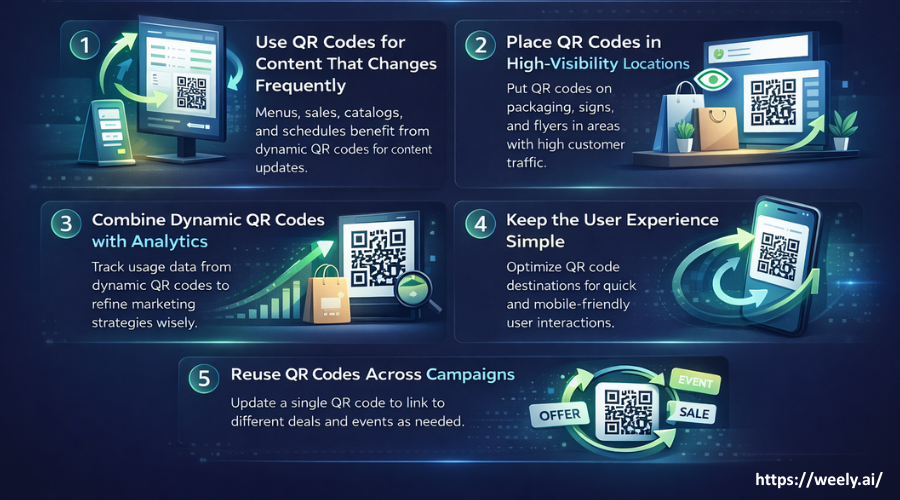
Use QR Codes for Content That Changes Frequently
Menus, sales, product catalogs, and event schedules are all great uses for dynamic QR codes. This way, printed materials stay useful for a long time.
Place QR Codes in High-Visibility Locations
Put QR codes in places where customers can easily see them. You could put them on product packaging, signs in stores, brochures, or flyers. This will make people more interested in each print. Additionally, it reduces the need to print unnecessary QR codes.
Combine Dynamic QR Codes with Analytics
You can connect dynamic QR codes to analytics pages even if you don't have any special tools. This lets businesses keep track of how people are using their products. Then, they can use scan data to make sure that printing resources are used wisely. As a result, QR code printing costs go down.
Keep the User Experience Simple
Make it easy to use and mobile-friendly for QR code links. Customers are more likely to scan codes if the process goes smoothly. It also makes printed QR codes worth more.
Reuse QR Codes Across Campaigns
You can use dynamic QR codes for more than one campaign. For instance, one code on a brochure can connect to different deals over time. This stops people from printing the same QR code over and over.
Real-Life Examples of Reducing Reprinting Costs
Dynamic QR codes have helped businesses in many fields save money and run their operations better. Here are some real-life examples:
Retail Stores
Clothing retailers print in-store posters with dynamic QR codes linking to seasonal products. When inventory changes, staff update the QR codes online. This means that posters don't have to be printed again. It also reduces Dynamic QR Code Reprinting Costs.
Restaurants
You don't have to print new menus every day or week anymore. Dynamic QR codes let customers see the most up-to-date menu on their phones. Because of this, restaurants save money. They also use less paper.
Events and Conferences
Conference badges have QR codes that change and link to session schedules. Instead of printing new badges for updates, the people in charge change the links on the web. This move cuts down on the cost of printing QR codes.
Real Estate
Dynamic QR codes on "For Sale" signs take you to current listings. Agents change the code to show other properties when they sell. This eliminates the need for new signs. It also makes sure that buyers have the most up-to-date information.
Travel and Hospitality
Hotels and travel agencies make brochures with QR codes that change for seasonal deals. Staff updates are available online. This way, they don't have to print the QR code over and over again. Campaign agility also gets better.
How to Print QR Codes for Less Money
Dynamic QR codes help you save cash. Codes can be changed, tracked, and used again and again. In addition, they cut down on printing over and over. Follow these tips to save even more:
1. Print Optimization and Design
When you are printing your QR codes, please pay attention to the design and format of the code before you print them. Proper preparation will ensure that your QR code is easily scanned and visually clear.
- Use Vector Formats: Always download your QR code in vector formats such as SVG, EPS, or PDF. Vector file types will maintain the sharpness of the QR code and almost guarantee that the printed version will never be blurry.
- Optimize Size and Contrast: Always make QR codes size with a minimum size of 1” x 1” or 2.5 cm x 2.5 cm and also use a very high-contrast color (i.e., black and white). This will help to make it much easier for the scanner to scan the QR code.
- Use High-Resolution Settings: When printing out your QR codes, ensure that you print them at the highest print quality that your printer can print. Use the highest print quality, as your QR code will most likely never be scanned successfully if it's out of focus. Always check each QR code printed to see if the print quality is good.
- Avoid Overly Complex Designs: Keep your QR codes simple because a simple design will have a higher chance of being scanned than a complex design and will also be easier to print than a complex design.
2. Strategic Implementation
Strategically placing and utilizing the QR codes you have will help extend the life of the codes you have printed. By using the correct materials, you will further reduce the cost of reprinting QR codes.
- Use One Code for Multiple Purposes: You can utilize one QR code to send different URLs to the user based on the time, the location, or the device a user is using at the time they scan the QR code. Therefore, you can use one QR code to promote multiple campaigns.
- Prioritize Durable Materials: Waterproof or UV-resistant materials last longer and prevent frequent replacements.
- Use Reduced Density Codes: Lower density URL codes mean that there will be fewer dots in your QR code, making it easier to scan. Lower density URL codes also allow smaller labels to have QR codes printed on them.
3. Testing and Pre-Print Measures
By testing your QR codes before mass printing, you will be able to identify problems sooner, ensuring that all items printed will function correctly and reducing overall resource waste.
- Test Before Mass Printing: Scan the test prints to ensure the codes work in their intended environment before producing a larger quantity of product; take corrective action when necessary.
- Validate the Landing Page: Make sure it’s optimally set up for mobile viewing; this will help prevent wasting scans or reprints.
4. Selecting a QR Code Generator
Identifying an adequate QR code generator will play a big role in reducing the likelihood of errors and ensuring the capabilities of your QR codes are being created through a trusted source to create a more streamlined process.
- Use a Trusted Platform: A source like Weely AI will allow for the production of dynamic codes in an efficient manner. By creating these types of codes, you can ensure continued use of the links and eliminate any concerns regarding the cost of reporting your dynamic QR codes.

The Environmental Impact of Reducing Reprints
Dynamic QR codes help the environment in addition to saving money. They help cut down on waste. Businesses use less paper and ink when they stop printing the same QR code over and over again. Because of this, they also save energy. Additionally, fewer reprints result in less material waste. This helps lessen the damage to the environment.
So, businesses that use dynamic QR codes can save money. They also back projects that are good for the environment. This practice is good for both business and the planet as a whole.
Conclusion
It's a good idea to switch to dynamic QR codes. It helps businesses save money. It also makes things more flexible. Also, it makes QR code marketing easier. Stores, restaurants, real estate companies, and event planners can all gain from this. Because of this, dynamic QR codes cut down on the cost of QR code printing. They also help save resources. Daily tasks get done faster.
By using dynamic QR codes for businesses, companies can update content in real time. They can also keep track of scans and see how many people are interested. They can also use codes from old campaigns for new ones. This means that there will be fewer reprints and better control. Dynamic QR Codes Reprinting costs are no longer a problem if you plan ahead. Instead, businesses waste less and spend less. They also make the customer experience better.
Dynamic QR codes are more than just a way to market something. They help keep costs down. They also make things more sustainable and flexible.
FAQs
What are dynamic QR codes, and how do they reduce reprinting costs for businesses?
Dynamic QR codes are QR codes that can be changed. They let businesses change the URL of the destination without having to print the code again. Because of this, businesses don't have to update printed materials very often. This makes it much cheaper to reprint Dynamic QR Codes. Additionally, it reduces the expenses associated with printing unnecessary QR codes.
How do dynamic QR codes help reduce QR code printing costs?
In a simple way, dynamic QR codes lower the cost of printing QR codes. Companies can change their content without having to print new materials. They don't reprint flyers, menus, or posters; instead, they change the linked content. This means that you won't have to print the QR code over and over again.
What is the difference between static and dynamic QR codes for business use?
Static QR codes point to a URL that doesn't change. After printing, that URL can't be changed. This necessitates reprinting website updates. A dynamic QR code for business, on the other hand, lets you make changes in real time. It also lets you track scans and use campaigns again. So, for long-term marketing plans, it's cheaper this way.
Can dynamic QR codes be reused across multiple marketing campaigns?
Yes, you can use dynamic QR codes in more than one campaign. Businesses can change the linked content based on the season, the promotion, or the audience. Because of this, they don't print things again. This feature helps lower the cost of reprinting dynamic QR codes. It also makes the campaign more flexible at the same time.
How does a QR code generator help businesses save on reprinting costs?
A good QR code generator helps businesses make QR codes that change. You can change these codes after you print them. Because of this, businesses don't have to pay for expensive reprints. Also, their investment in QR code printing will still be useful for new campaigns and updates.
Why is QR code printing more cost-effective with dynamic QR codes?
Dynamic QR codes make printing them less costly. Companies print once and then change the content digitally. This means that less waste is produced. This also prevents the use of outdated materials. Over time, the costs of printing and design go down.
How can businesses track QR code performance to avoid unnecessary reprints?
Scan analytics lets businesses keep track of how well they are doing. Businesses link these insights to QR codes that undergo changes. Companies use this information to find materials that work well. So, they get rid of the ones that don't work. This cuts down on wasted QR code printing and boosts the return on investment for marketing.
Are dynamic QR codes suitable for small businesses looking to cut printing costs?
Yes, small businesses should use dynamic QR codes. They make it less necessary to print things over and over. Menus, brochures, and other marketing materials can stay the same. So, they are a cheap way to make marketing more effective.
How do restaurants and retail stores use dynamic QR codes to reduce reprinting expenses?
Restaurants use dynamic QR codes to display digital menus. You can change these menus without having to print them again. Stores use them on signs and displays. Customers can see new deals right away because of this. This method makes it cheaper to print QR codes. It also stops marketing materials from becoming out of date.