Every marketing campaign is built on one little but powerful thing: a link. And so does every product launch and social post. As brands push more content across more channels, a link management platform has quietly become a core part of marketing infrastructure. For example, an email might include a branded short link. The product packaging might have a QR code. A paid ad can lead to a tracked URL. Your link handling in each case shows your audience knowledge and ROI.
As the demand for branded links, real-time analytics, QR codes and campaign tracking grows, this is a familiar question many companies now face. Should we build our own link management system, or should we buy an existing one? Or buy existing ones? At first it appears to be an easy choice. But it hits engineering time, marketing budgets, security policy and long-term growth plans all at once.
In this blog you’ll learn what a link management platform actually does. Plus, you’ll learn why businesses rely on one, the real cost of building vs. buying, and how to leverage a practical framework to help you make the right decision for your organization.
What Is a Link Management Platform?
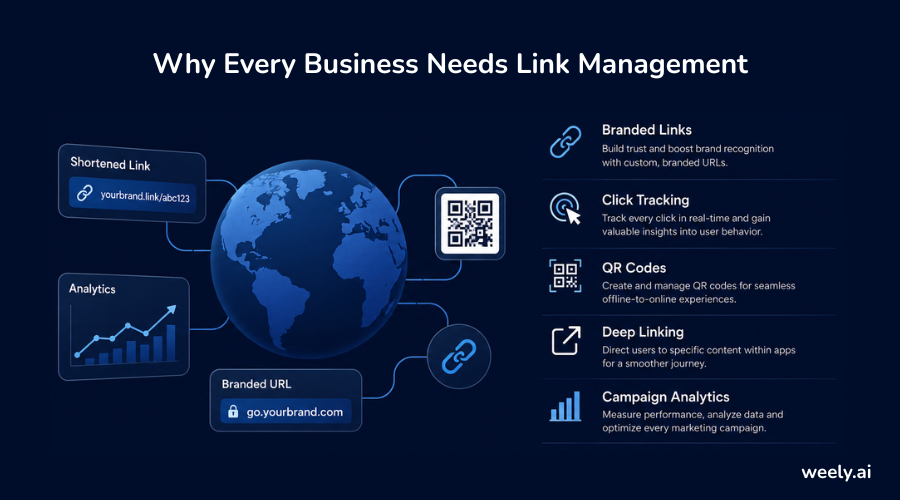
A link management platform is software that enables businesses to create, customise, track, and control links they share online. But it’s not just a simple URL shortener. A simple shortener takes a long URL and shortens it. A full platform does that too but also allows you to brand the link, see who clicked, control where it goes, and manage all that at scale across teams.
How It Differs From a Basic URL Shortener
A free URL shortener should be fine for one single link. But when a company needs dozens, or even thousands, of links for so many campaigns, departments, and regions, a shortener isn't enough. Instead, a real link management solution gives structure. It gives you branded domains instead of generic ones, detailed click analytics instead of raw counts, and governance controls so the right people are managing the right links.
Core Capabilities
Most modern platforms share a common set of features:
- Link shortening - Turning long URLs into clean, shareable links. It is easy to share links.
- Branded domains - Vanity URLs not a generic one, for your branded link management. This creates trust.
- Click tracking - Who clicked, when, and from where. You can see user activity.
- Redirect management - Managing where a link redirects users (URL redirect management, link routing). You can change your destination at any time.
- QR code generation - Turn links into scannable QR codes for easier management. The link is opened by the users.
- Deep linking - Using deep link management to send mobile users directly into an app screen. This method improves the experience of the app.
- Team Collaboration - Shared workspaces, roles and permissions. Teams collaborate. They have the right access.
- API integrations - Linking to your existing marketing stack. Also, it saves time.
- Security and compliance - Protecting link data, meeting regulatory requirements. Finally, the data is secure.
Why Businesses Need a Link Management Platform
With more channels come more links. A single marketing campaign can combine multiple channels such as email, social media, SMS, print media, and paid advertising. You need a tracking link for each channel. Without a system, teams lose track of links. Managing them soon becomes difficult.
Centralized link management solves this problem. Each team gets one place to create, organize and track links. Teams work faster. They’re organized too. Consequently, it offers many tangible benefits:
- Better campaign tracking - Marketers can see what channel, ad or email drove traffic. This enhances future campaigns.
- Improved brand trust - A branded short link builds more trust than a generic or unknown domain. You'll get more clicks on the link.
- Higher click-through rates - Recognizable, branded links tend to get clicked more often than random strings of characters. They also help establish a consistent brand image.
- Marketing automation - Links can initiate trigger workflows across different systems and processes. They can be tagged to leads. They can also send data to automation tools. This saves you time.
- Performance analytics - A link analytics platform will show click volume, location, device and referral source in real time. Such data means teams can make decisions quicker.
- Team Collaboration - Connect libraries shared between marketing, sales and product teams. This approach prevents duplication of effort. It also aligns everyone.
- Enterprise governance - Large organizations need audit trails, permissions and consistent branding across departments and that’s where link governance comes in.
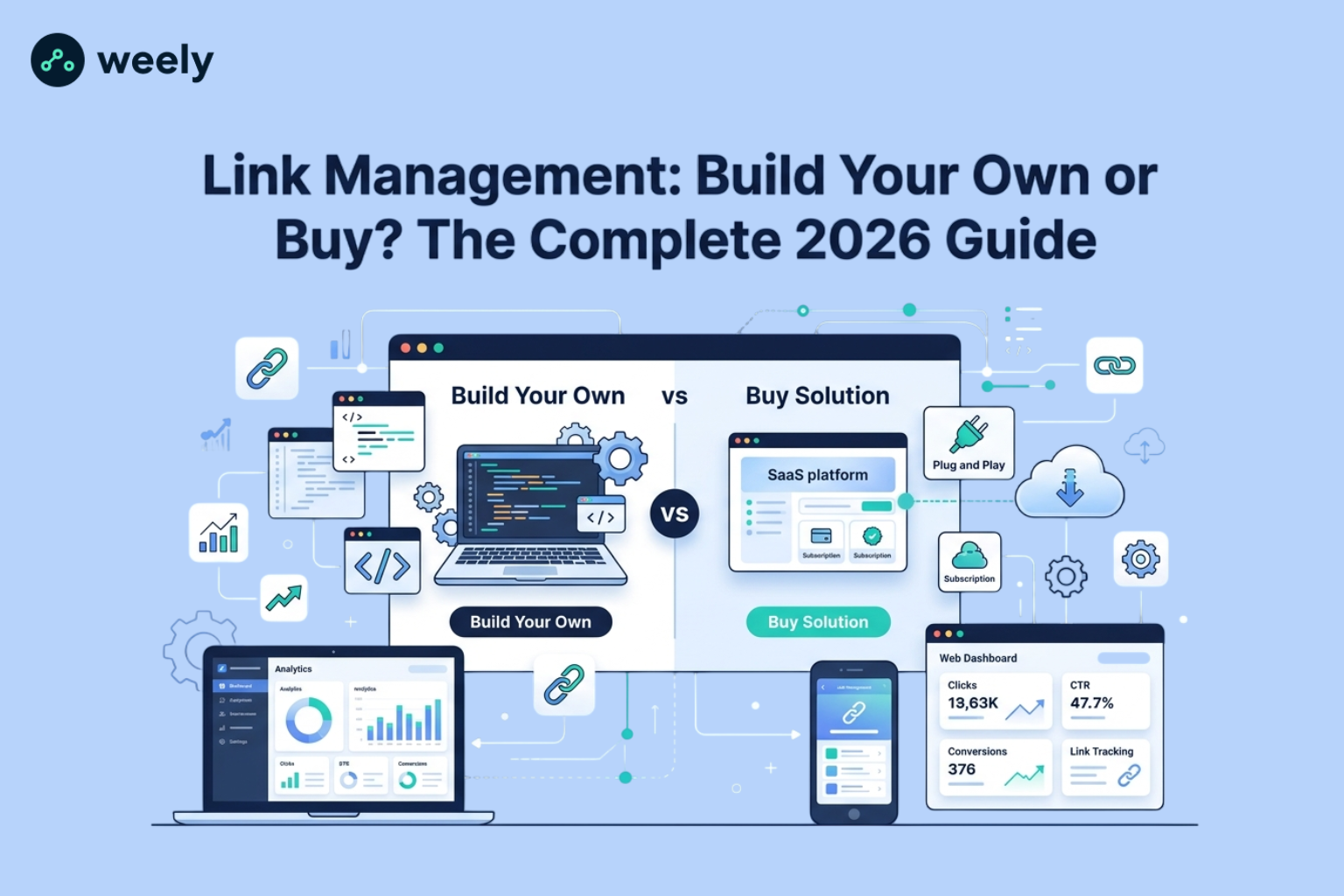
Build vs Buy: Understanding Your Options
This is the fundamental decision that this guide is based on. Do you spend engineering time building a custom URL shortener from scratch? Or do you prefer an existing link management software platform? They each have their own real trade-offs.
Building Your Own Link Management Platform
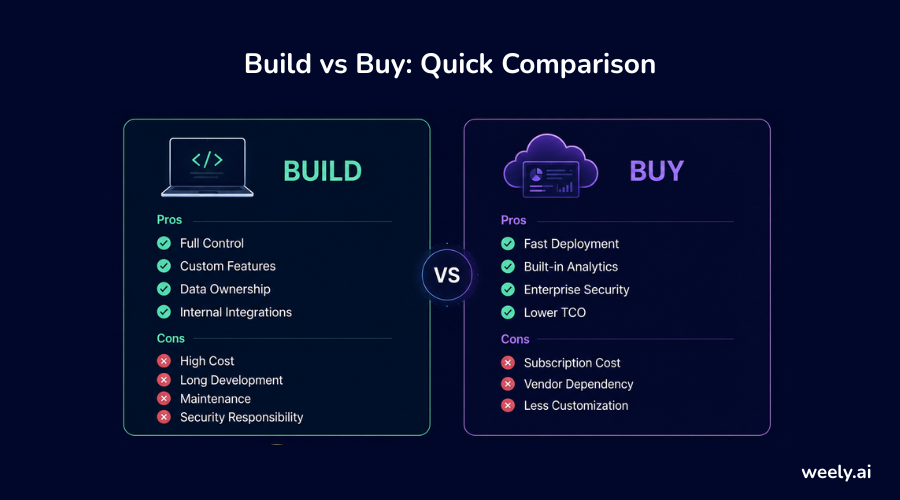
Building your own link management system gives your team full control over the platform’s architecture, features and roadmap. But it also means taking on every technical and operational responsibility that comes with running production software, and you own that.
Advantages of Building a Link Management Platform
Overall, building the platform in-house allows your team to mould it to your exact needs. So you set the rules instead of adapting your processes to match someone else’s product decisions.
- Full control over features: With an in-house build, you determine exactly what the platform does and does not do. You don’t have to wait for a vendor’s product roadmap.
- Complete data ownership: All click data, user data and link histories are entirely on your infrastructure.
- Custom Integrations: Connect your internal tools in a vendor-agnostic, straightforward way.
- Tailored workflows: The platform can be tailored to your exact internal processes. Your team doesn’t have to fit into someone else’s design.
Challenges of Building a Link Management Platform
But control carries with it a real responsibility. If you build your own system, you bear all costs, risks, and technical tasks. Your team does it all instead of relying on a vendor.
- High development costs: Skilled engineers, designers and QA testers are expensive. It therefore costs a lot of money to build a reliable system from scratch.
- Ongoing maintenance: Software requires constant maintenance. It doesn’t stop at launch. Also, ongoing costs include bugs, updates and new feature requests.
- Security responsibilities: Your team is solely responsible for protecting against link abuse, spam, data breaches and compliance failures. Thus, the importance of good security practices. Your backup vendor security team is a myth.
- Infrastructure management: You are responsible for managing servers, databases, and uptime monitoring. You have to play against them every day as a team.
- Scaling issues: Something that works for a few thousand links may not work down the line. For example, campaigns can grow to millions of redirects a month.
- Long implementation time: It can take many months to build a link management system that is ready for production. It takes even longer for the business to see value.
Buying a Link Management Platform
When you subscribe to a well-established provider of link management software, your team can skip the build phase entirely. Instead, you can start to manage your branded links, analytics and campaigns almost immediately.
Advantages of Buying a Link Management Platform
Usually, choosing a ready-made platform delivers quick, tested, and reliable advantages. Otherwise, a building team would have to spend months or years achieving the same results on their own.
- Fast deployment: You can typically implement a SaaS link management platform in days and not months.
- Proven Reliability: Standard platforms have been tested at scale by numerous other companies.
- Built-in analytics: Typically, a ready-made link tracking software solution comes with dashboards, reports and UTM tracking out of the box.
- Enterprise-grade security: Vendors spend a lot of time managing the security of links, SSL, SSO, independent security audits, etc.
- Continuous updates: New features and fixes are deployed automatically. So no further internal engineering effort is required.
- Dedicated customer support: When something breaks, you receive a support team on the line, not just internal staff.
- Lower total cost of ownership: Membership pricing is typically far more predictable. It also tends to be less costly in the long run than the hidden cost of maintaining custom software.
Potential Drawbacks of Buying a Link Management Platform
That said, buying has its trade-offs. You hand over control of your link infrastructure to a vendor. And for that, you get speed. You also get support.
- Subscription costs: Ongoing charges can be costly. That’s more typical at higher usage levels.
- Feature limitations: You can use only features supported by the vendor’s platform. Such restrictions can leave some of the more sophisticated needs unmet.
- Vendor dependency: Your link infrastructure depends on a third party. If the service is down, your links may be affected. So, have a backup plan.
- Less customization: Some workflow needs are very specific. As such, a ready-made tool may not meet all needs. However, it addresses many of the most frequently encountered use cases.
Hidden Costs of Building Your Own Platform
The upfront cost of building a custom link management platform is seldom the whole story. Some costs appear only after the project begins. Many teams, for example, learn about these costs after development has already begun.
- Developer salaries - Engineering work doesn’t stop after launch. The result: labour costs continue to go up.
- Infrastructure - There is a monthly charge for servers, databases and networking. And these costs increase with the size of the platform.
- Cloud hosting - Massive campaigns can cause traffic spikes that quickly inflate hosting costs. Hence, the monthly expenses can vary.
- Monitoring - Monitoring tools, for up-time and performance, add cost to the technology stack. At the same time, they help teams identify problems early.
- Security audits - Teams must audit themselves regularly to find security gaps before the bad guys do. This helps reduce risk.
- Bug fixing - Every software product has bugs which need developer attention. Teams will need to allocate time to address these issues.
- Technical debt - Shortcuts taken early on result in teams revisiting and rebuilding parts of the platform later. Thus, future work is more expensive.
- Compliance requirements - If you need to meet standards like GDPR or SOC 2, you need dedicated legal and technical work. In many cases, companies will also need ongoing reviews.
- Documentation - Internal tools should be well documented for onboarding new hires and for future maintenance. That makes it easier to board.
- Customer support - If other teams or clients are using the tool, someone needs to be providing support. Meanwhile, support requests may rise over time.
- Opportunity cost - Engineering time spent on link infrastructure is not spent on the core product. This allows developers to concentrate on building the core functionality.
Total Cost of Ownership (TCO): Build vs Buy
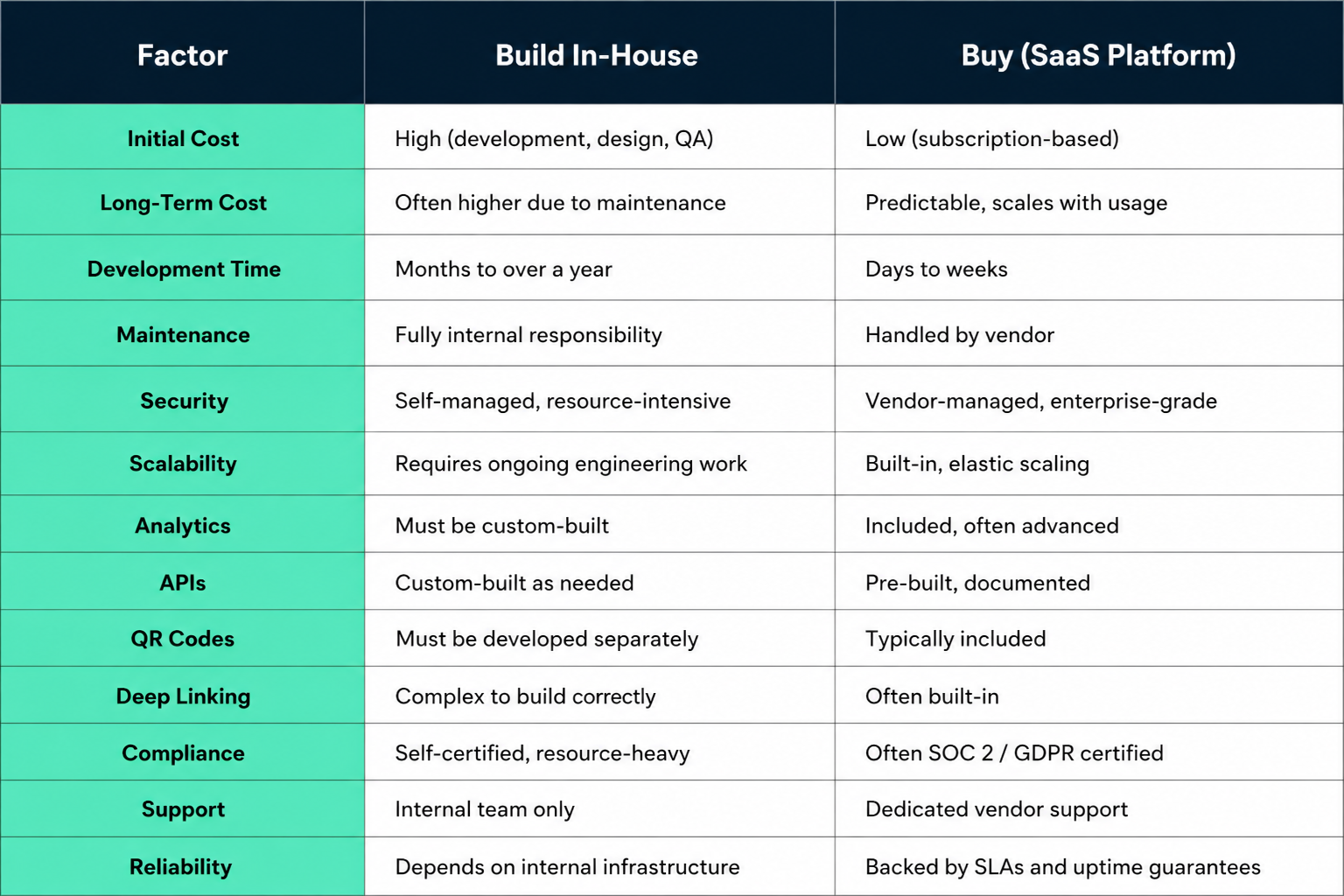
If you want to compare them on a level playing field, it helps to think in terms of total cost of ownership, not sticker price.
Building typically involves:
- One-time development costs
- Annual maintenance
- Costs for infrastructure and hosting services
- Costs related to staffing or personnel
- Future upgrades
Typical buying process:
- Charges for software licensing
- Predictable annual or monthly subscription costs
When evaluated over a 3–5 year period, many organizations discover that adopting a SaaS-based link management solution is more cost-efficient in the long term. There are real costs, e.g., developer time, infrastructure and ongoing maintenance. That makes it easier to see the savings. So, the ROI comparison is clearer for companies without a big dedicated engineering team.
When Building a Link Management Platform Makes Sense
Not everyone is made to build their own system, but that’s totally cool. It actually works for some businesses. These are:
- Large enterprises with engineering teams and sufficient budget for long-term development.
- Highly regulated industries where compliance regulations do not allow them to take data off of the premises.
- Unique workflow requirements that no off-the-shelf tool can meet.
- Existing engineering resources that teams can use because they aren’t needed for other projects.
- Proprietary technology requirements such as deep integration with internal, custom-built systems.
When Buying a Link Management Platform Makes Sense
For most organisations, the more practical route is to buy an existing enterprise link management platform. Often this option is time-saving. Thus, it generally applies to:
- Marketing teams that need to go fast, without engineering waiting on them.
- This solution is ideal for SaaS companies that require reliable link tracking while preserving their product resources.
- Agencies managing links for multiple clients at once.
- An e-commerce company runs frequent, high-volume campaigns.
- Startups operating with a limited time and budget.
- Companies that need to roll out quickly across many departments.
- Organisations with fewer engineers want to concentrate developers on core products. Therefore, they have more time to improve the main product.
Essential Features to Look for in a Link Management Platform
When you compare vendors, look for these categories of features, or evaluate a platform like Weely AI. Every category serves a specific purpose.
Branding
Trust is built by custom domains and branded short links. They also maintain links across campaigns.
Analytics
Marketing teams can use real-time reporting, geographic insights, device analytics, and UTM tracking to track campaign attribution. This is the way it goes. As a result, teams work faster.
Link Controls
Expiration dates, password protection, redirect rules and the ability to edit a link after it’s published provide control. So teams deal with links with less work.
Collaboration
Collaborate with multiple workspaces, user roles, permissions and audit logs. They also don't run campaigns.
Integrations
Connections link to your marketing stack via CRM connections, marketing automation tools, REST APIs and webhooks. This enhances data flow. It saves the teams time and less manual work.
Security
Data is secured with SSL, Single Sign-On (SSO), GDPR compliance, SOC 2 compliance, and strong access controls. So, they are a must-have for any enterprise URL shortener.
Final Verdict: Build or Buy?
Either approach can work. But they are for different needs. For larger companies, it’s better to build your own link management system. These teams have engineers dedicated to them. They also deal with strict regulatory needs or highly unique workflows. Most teams benefit from a pre-built link management platform. That includes marketing teams, agencies, startups and any organization that needs reliable analytics, branding and security. Additionally, this type of solution helps free up engineering time so teams can focus more on core products.
The best choice will depend on your budget, timeline, customization needs and growth plans. Purchasing is of greatest benefit to smaller and mid-sized businesses. Meanwhile, only the largest organizations can even justify building from scratch. These situations often come with strict regulatory or technical requirements. Every path has its compromises. So choose according to your situation. Ensure you have a solid link management system that can grow with your business. Find a link management platform in your existing stack or request a demo to get started fast. Get started today.
Frequently Asked Questions
What is a link management platform?
A link management platform is software that makes, brands, tracks and controls links. It is useful for marketing and business use. It’s more than just a link shortener as well.
Is building a link management platform more cost-effective?
Not really if you think about everything that goes into it. At first sight, the first build might look simple. But ongoing maintenance adds to costs over time. Infrastructure, security and staffing are additional costs. An in-house system can often cost more over several years than a subscription-based platform.
What are the hidden costs of building your own solution?
There are hidden costs such as developer time, cloud hosting, security audits, bug fixing, compliance work and documentation. They also include opportunity costs. Engineers spend less time on the core product.
What features should every enterprise link management platform include?
At the very least, look for branded domains, full click analytics, QR code generation, deep linking, team roles and permissions, API access and strong security features like SSO and SSL.
Can small businesses benefit from enterprise-grade link management?
Yeah. Campaign link management, branded links, and analytics are also available for smaller teams. Such tools help increase click-through rates. They also enhance marketing insight regardless of the size of the company.
Is SaaS more secure than self-hosted solutions?
Mature SaaS vendors have security teams, regular audits and compliance certifications. Hence, they maintain high security standards. Internal teams of this size generally struggle to match this level of security without significant investment.
What is the best option for growing businesses?
For the majority of growing businesses, purchasing a scalable link management solution equates to rapid deployment, less risk and predictable costs. Also, it is easier to avoid long development cycles than to build and maintain a custom system.